Bilingual Context
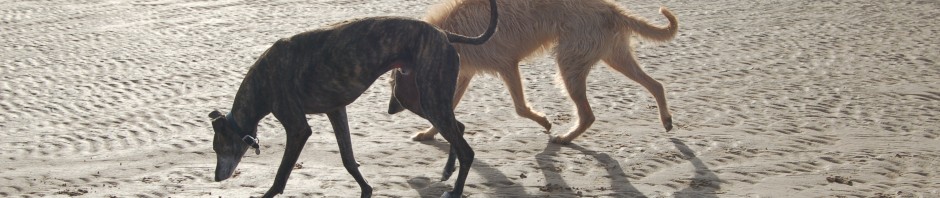
It is a pleasant summer morning, and I am walking my lurcher dogs through my town of Amlwch, which is the most northerly town on the island of Anglesey, indeed in Wales a whole. Periodically, when I am tuned in, I greet people
Good Morning
Bore da
Mae’n braf
Mae’n lyfli (lovely)
Bore da
Bore da. Mae hi’n braf
It’s nice, yeah.
It is a bilingual community, and Welsh and English are used interchangeably. Anglesey, with its neighbouring county, Gwynedd, have a higher proportion of first language Welsh speakers than the rest of Wales.[1]
The Learning Context
I am an avid learner. At present not only I am working towards a PhD, but I am learning the Welsh language. I am hooked. I began my learning in Learn Welsh’s Ysgol Haf (Summer School) in July 2014 and have spent every Friday in a Welsh Class from September of that year. I have followed the Wlpan programme, thus having completed Wlpan, Pellach, Pontio and about to embark on Uwch.
These courses were inspired by the revival of Hebrew in Israel. Following the Second World War, intensive Hebrew Ulpan courses were established in Israel to cater for the large influx of immigrants from different countries…One of the course tutors, Shoshana Eytan, was invited to Wales in 1972 to discuss her experiences, and in 1973 the first Welsh Wlpan course was established in Cardiff.[2]
While the methodology is similar with the concentration on linguistic building blocks, specific patterns and encouragement to take what we know into the wider community, the contexts of the two situations are different. The Welsh Wlpan is part of a strategy to revive the Welsh language. Crowe argues the Welsh Wlpan is more ‘on the offensive’ and exists in a context where very few learners learn the language for practical reasons.[3]
I would place myself in the category of those who need to learn on both a practical and theological level. I learn so I can communicate in the mother tongue of the majority of those I live and work amongst. The ethnographer, Carol Trosset also learned Welsh following the Wlpan model in 1981/1982. At that time, she described Welsh as a ‘dying language’.[4] It would difficult to describe the language thus at the end of the second decade of the twenty first century. Unlike Trosset, I am a priest-theologian and sit comfortably on the evangelical side of the Church in Wales, I therefore want to speak to people about their faith in their mother tongue. I am to some extent a missionary.
I am the Vicar of Bro Eleth which covers the north west of the Island including the towns of Amlwch, Llannerch-y-medd and Moelfre. The first two with populations of 3500 and 2100 respectively have 66% and 80% first language welsh speakers. In Wales the population just under 19% of the population claim to speak Welsh. Moelfre, which is approximately five miles away from Amlwch, with a population of around 1400 is a little different, with under 30% of the inhabitants able to speak Welsh. Thus, in the towns of Amlwch and Llannerch-y-medd life can be transacted solely in Welsh, in terms of conversation, business, education, shopping, entertainment and worship. This is not to say that it is the case all of the time, and indeed if a visitor to the area tuned into the conversations going on, they would hear switching between the two official languages of Wales, often it seems to be almost unconsciously, rather than the almost mythical assumption that when an English person walks into a pub or shop, the conversation deliberately switches to Welsh for the sole purpose of excluding the other.
I have been known to sometimes tweet in Welsh, spending far too long in doing so and to blog my sermons, which are being read by other Welsh learners. I also try to read novels aimed at Welsh learners. Learning a language spoken by a sizable proportion of the people who live around me takes a significant amount of my time
I find that I augment my class based learning by using the web, indeed periodically, I receive emails from Duolingo informing me that I had made it sad because I had not engaged with its internet-based learning for several days. I put aside the funeral preparation and spent the next twenty minutes clicking and learning. Many learners use social media either to augment their face to face learning or learn solely on the web (e.g., Say Something in Welsh).[5] Ann Jones has led a study on the use of various social media platforms for those learning Welsh.
It found that most learners use tools for sharing media and resources, for chatting and interacting with other learners, social networks and microblogging. Which social media they used and how, varied, so for example only the more experienced learners blogged, although a number used twitter, chat or email.[6]
I am not alone amongst my clergy colleagues on the Island, several of us are Welsh learners. Price, when writing his history of the Church in Wales since disestablishment, notes regarding the Diocese of Bangor, ‘some priests have learnt Welsh and they serve in an increasing number of parishes’[7] He goes on
It is difficult to see how there can be really effective pastoral ministry… until more native speakers of Welsh come forward for ordination’.[8]
Price is right on both a pastoral and missiological level, those who are first language Welsh should be served by clergy who are cut from the same cloth. Yet, part of me experiences a certain grumpiness to the assumption that I cannot provide ‘really effective pastoral ministry’. It is true that when I began to learn the language, I stumbled and often fell in terms of mispronouncing words and then getting the meanings of words wrong. My experience has been up to now one of gratitude, and often amazement, at my commitment.
If only some others thought the same way is an oft repeated comment
The Learning Experience
My experience is not universal. Learn Welsh courses throughout Wales, are currently being reviewed to ensure that the dovetail with the Welsh Assembly’s declared intention of 1 million Welsh speakers by 2020. One of the initial reviews noted simply
Hostility, reluctance or embarrassment from native speakers will easily discourage learners. Therefore, it will be helpful to encourage native speakers to become more involved in the development of learners as successful speakers of Welsh.[9]
Trosset is helpful here with her own observation of learning the language:
Another problem with speaking to learners is that language learners are essentially like small children in their linguistic ability: they need to be spoken to simply, to have a chance to repeat what is said to them, and to be corrected when they make mistakes.[10]
This is my experience. There are still first language Welsh speakers who I am unable to hold a meaningful conversation in Welsh with because I do not want to make a mistake in front of them. This is because to do so seems to be offensive. Language and identity are inextricably linked.[11] Of primary importance it is essential to note that it is too simplistic to say that ‘to be Welsh means to be Welsh-speaking’. Daniel Evans’s auto/ethnographic study of Porthcawl, situated as it is in what is described as British Wales speaks both of a love of the language that they do not speak and a strong Welsh identity.[12]
I have not only had to learn just a language, but to enter what is a different culture. Again, I find certain echoes, but some dissimilarities, in my own experience in Trosset’s journey as a learner.
On more than one occasion I was described as ‘the Welshwoman (Cymraes) from Ohio’. This is possible because, at its most fundamental level, to be Welsh means to be Welsh speaking. This was demonstrated in a conversation I overheard among three native Welsh speakers, concerning the girlfriend of a friend of theirs. One of them asked (in Welsh), ‘is she a Cymraes?’ The second replied, ‘I don’t know – she’s learned Welsh, anyway’, at which the third declared flatly, ‘Cymraes, therefore’. In fact, the two terms “Welsh” (nationality) and “Welsh speaker” are the same word in the Welsh language: Cymrol Cymraes. To ask “Cymro ydy o?” is to ask both ‘Is he a Welshman?’ and ‘Does he speak Welsh?’[13]
The dissimilarities in our experiences may revolve around the fact of gender and role, as well as the fact that Trosset was not rooted in a place. Moreover, I am an Englishman, while Trosset is American, which means that I am confronted by the histories of the complex relationships between England and Wales in a way that Trosset is not. Yet, just as Trosset is given honorary Welsh status at times, in Llannerch-y-medd, I am known as the English vicar ‘who belongs to us’.
There is a difference in time as well. Since 1981, what has been described as the passive revolution of devolution as happened,[14] with a general consensus that the process of devolution as engendered greater confidence in terms of what it means to be Welsh, although Evans uses the word interregnum for where he understand Wales to be at the moment. He notes that in many ways’ life continues for Wales in the same way as it did before devolution occurred. The Welsh Assembly administration has less power than its Scottish counterpart, and support for independence in Wales has not yet attained some of the statistical heights as it does within Scotland. Nevertheless, it would not be accurate to assume that nothing has happened. The desire for independence is not as prevalent, despite the fact that there is a greater curiosity about its possibilities, fuelled by the behemoth that is Brexit. Wales, like its neighbour, but unlike its Celtic cousins voted to leave rather than to remain.
Sophie Williams recent study comparing the experiences of national identity in Wales and the Basque Country because of their status as stateless nations offers us further material upon which to reflect.[15] Like Trosset before her, Williams draws on the work of Denis Balsom’s three Wales model dividing the country into three: British Wales, Welsh Wales and Y Fro Cymraeg.[16]
This does not appear to work as a singular model on Anglesey. Both Amlwch and Llannerch-y-medd fit comfortably within Y Fro Cymraeg, and yet even within these towns there would be different expressions of Welshness.
‘Being Welsh is about having an identity: that identity is expressed in language, rugby and the slate’. (Janet Sheffield, Tutor, Isle of Anglesey County Council)
Janet is from the town of Blaenau Ffestiniog, which is shaped by its relationship with the slate quarries.
‘I do not use the language in my daily life. If you bless me in Welsh alone, I am not blessed’ – (Ruth Owen, retired farmer)
Ruth is Anglesey born and has never left Wales
Williams used focus qualitative focus groups in Wales, rooted in Balsom’s three areas. Williams writes,
Broadly speaking, therefore, conceptualisations of Welshness coalesce around five main elements: an intangible sense of Welshness as a feeling; a sense of pride in that feeling; a sense of self and identity; a sense of difference from others; and a sense of belonging to a place. Throughout, the subjective nature of these conceptualisations is apparent, as is the conflict between self-identification and external categorisation and the arbitrary way of applying the latter, with place of birth and family background key influences.[17]
There are degrees over overlap between Williams’s conclusions and Trosset’s earlier ethnographic research. Trosset observed that certain definitions of Welsh social identity, are hegemonic in Welsh culture. These concepts are egalitarianism, martyrdom, performance, and emotionalism.[18] Whilst, Trosset focused her research on contexts that are predominantly Welsh speaking her overall conclusions were re-confirmed in collaboration with Caulkins.[19]
Not unusually, those interviewed, by Trosset, Trosset and Caulkins, and now Williams who are first language Welsh deemed knowledge of the language as important to their identity as Welsh people. More surprisingly is the assertion that those from England can become Welsh if they learn the language. This is not to say that those who were born in Wales are deemed not to be Welsh. An example of a conversation that took place in Llanystumdwy will suffice to underline the point.
P7: I will never, ever be accepted as Welsh… we can have people who come over to England, or Britain, and they get citizenship…you can’t move to Wales and say I have dual nationality, if you move to Wales from England, you’re English, and that’s it
P6: You can if you become fluent in Welsh…
M: So, what does that mean for somebody like me that’s Welsh, but doesn’t
speak Welsh?
P4: Well, you are Welsh
M: I’m Welsh because I was born here already, so I don’t need to prove
myself as Welsh by learning the language?
P4 and P6: No
M: Whereas an English person would have to prove it and learn the
language?
P2: Ie, dw i’n cytuno [Yes, I agree][20]
When Williams tests this hypothesis further, there is a degree of scepticism as to whether firstly an English person would be sincere enough to become Welsh, and indeed evidence of suspicion as to why someone from England would consider themselves to be Welsh.[21] Consistent across the three groups in Williams’s research is the framing of what it means to be Welsh over and against what it means to be English, or what is perceived as being English. For just as Williams’s research acknowledges that there is a continuum of what Welshness might mean, the same must be said of being English. The regional differences between the North East of England and Greater London are as pronounced as the differences between Swansea and Holyhead. Indeed, it may be that at one level the commonalities between a docker on the Humber are greater with a docker in Swansea than between the shop owner in Cardiff and the farmer on the Llyn Peninsular.
However, when we view this the other way around, what does the learning of and operating within a second language do to the individual who is the learner. First, I have found that language cannot be separated from culture, it is not learnt in an isolated sanitised way. It has been important to me to begin to grapple with some of the issues of being English in Wales. Second, as Robin Mann has noted
In attempting to accommodate and use Welsh in public, learners will often experience feelings of embarrassment and awkwardness.[22]
This is particularly acute for someone like me who is leading worship, speaking or attempting to chair a meeting. Whilst at the beginning, these can be laughed at, as I must get used to fact that I communicate differently in my mother tongue. I relish speaking without notes, but in Welsh much more must be scripted.
Thus, in school assemblies, I have begun incorrectly for 18 months. I am aware that hogyn and hogan are boy and girl respectively. I had learnt from watching the rugby or football, then hogia is boys. Thus, I deduced that hogannau must be girls, when it is in fact on Anglesey, gennod. Each act of worship in school has begun with me saying, ‘Bore da Hogia. Bore da Hogannau’. There has been uncorrected for several reasons. First, because everyone understood what I had said. Second, a sense of empathy with me for trying to learn, and third a reluctance to offer correction. This is true of adults, children had no problem in telling me that Jesus did not fly into Jerusalem on the donkey.
My identity
Mann notes further that a commonality faced by all learners is ‘a sense of being or feeling like an outsider in relation to an experience of attempting to speak Welsh’.[23] Trosset’s earlier study touched on this, suggesting that the learner in Wales is regarded as different.
Being a language learner does require a degree of self-motivation, especially if you are going to use that language in public. At first it is necessary to allow yourself to stumble and fall. There are times when what I want to say far outruns what I can say, and in this there is a level of faltering vulnerability.
At this stage, I cannot say whether I am a different person in Welsh. It is too early to say. I function differently. This is in part due to the limitations of my vocabulary. I am unable to preach in Welsh using more nuanced language. I have in a Civic service come for example to the offertory hymn and completely forgotten the word for collection or offering and said ‘sgynnoch chi bres’ – ‘do you have any money?’. It is in part because of how the wider Wlpan programme is taught, beginning with how to converse about life, family, holidays and interests. I have therefore had conversations in Welsh about subjects that I would not have in English. It may be that the Welsh speaking Kevin enjoys small talk (siarad man) more than his English-speaking counterpart.
Learning a language does offer a mirror to look into. I preach more simply in English because I have discovered that it is effective in Welsh. Similarly, learning something of the colonial/postcolonial complexities of the relationship between the two neighbours has forced me look at how I might conduct myself
I regularly tell a story of a conversation between myself, as vicar, and the head of a secondary school. The head teacher explained in concise, yet forthright terms, that in every conversation he had with an English professional he carried with him the memories passed down by his parents of punishment being metered out for using Welsh rather than English.
Archana Pathak who links together the disciplines of postcolonialism and autoethnography notes the following
postcolonial autoethnography has the capacity to achieve two intertwined goals: the creation of a scholarship that serves to reveal and disrupt dominant structures of oppression and the recognition that the process of knowledge production itself must be continually be scrutinized to assure that the scholarship does not reproduce the very systems it is working to dismantle.[24]
Postcolonialism becomes a particular lens through which her autoethnographic endeavour is conducted. Pathak follows Gonzalez in offering four ethics for a postcolonial ethnography, namely: ‘accountability, context, truthfulness and community’.[25] For Pathak, these ‘are intertwined and created a synergy’ which taken together ensure ‘that the colonialist voice is not reproduced’.[26] Unlike, the autoethnographies offered by Pathak and Gonzalez, postcolonialism moulds my own endeavour and context differently, namely that if Wales is considered to be postcolonial, then as an Englishman my identity is sometimes shaped by being identified with the historic oppressor. Autoethnographically, I am involved in postcolonialism and its history differently to that of Pathak and Gonzalez.
When I open the Bible, turn the pages in a prayer book or engage in conversation, I am different.
The critical autoethnographer enters strange and familiar situations that connect critical biographical experiences (epiphanies) with culture, history and social structure…. Epiphanies are experienced as social dramas, as dramatic events with beginning, middles, and ends. Epiphanies represent ruptures in the structure of daily life.[27]
Thus moving to Wales was for me such a rupture with the discoveries of difference and otherness that that series of events have brought.
[1] See Welsh Government, National Survey for Wales, 2017-18 Welsh Language: Confidence and attitudes (October 2018), p. 6.
[2] Colin Baker, Hunydd Andrews, Ifor Gruffydd and Gwyn Lewis. ‘Adult language learning: a survey of Welsh for Adults in the context of language planning’, Evaluation & Research in Education
Vol. 24, No. 1, March 2011, 41-59
[3] Crowe, A. (1988a). Yr Wlpan yn Israel. Aberystwyth: Canolfan Ymchwil Cymraeg i Oedolion.
[4] Carol Trosset, “The Social Identity of Welsh Learners”, Language in Society, Vol. 15, No. 2 (Jun. 1986), p. 167.
[5] See https://www.saysomethingin.com/welsh
[6] Ann Jones, Social Media for Informal Minority Language Learning: Exploring Welsh Learners’ Practices. Journal of Interactive Media in Education, 2015(1): 7, pp. 1-9, DOI: http://dx.doi.org/10.5334/jime.ak
[7] Price, D T W. A History of the Church in Wales in the Twentieth Century. Penarth: Church in Wales, 1990, p. 62.
[8] Price, Church in Wales, p. 62. Contra, Morgan who writes,
[9] Chriost, Diarmait et al. Welsh for Adults, Teaching and Learning Approaches, Methodologies and Resources: A comprehensive research study and critical review of the Way Forward. Cardiff University, 2012, p. 48.
[10] Trosset, ‘Social Identity’, p. 171.
[11] Richard Jenkins, Social Identity. 4th edn. London: Routledge, 2014, p. 6.
[12] Daniel Evans, Post-Devolution Welsh Identity in Porthcawl: an ethnographic analysis of class, place and everyday nationhood in ‘British Wales. Unpublished PhD, Bangor University, 2014.
[13] Trosset, ‘Social Identity’, p. 173.
[14] Daniel J Evans, “Welsh devolution as passive revolution”, Capital & Class 2018, Vol. 42(3) 489–
508
[15] Sophie Williams, Rethinking Stateless Nations and National Identity in Wales and the Basque Country, London: Macmillan, 2019.
[16] Denis Balsom, ‘The Three Wales Model’, in The National Question Again: Welsh Political Identity in the 1980s by John Osmond, ed. (Llandysul: Gomer, 1985), 1–13.
[17] Williams, Rethinking Stateless Nations, pp. 82-83.
[18] Carol Trosset Welshness Performed: Welsh Concepts of Person and Society. London: University of Arizona Press, 1993.
[19] Trosset and Douglas Caulkins, ‘Triangulation and Confirmation in the Study of Welsh Concepts of Personhood’ Journal of Anthropological Research, Vol. 57, No. 1 (Spring, 2001), pp. 61-81
[20] Williams, Rethinking Stateless Nations, p. 82.
[21] Williams, Stateless Nation, pps. 112 and 113.
[22] Robin Mann, ‘Negotiating the politics of language: Language learning and civic identity in Wales’, p. 213.
[23] Mann, ‘Language Learning’, p. 219.
[24] Pathak, Archana. ‘Musings on Postcolonial autoethnography: Telling the Tale of/through my life’, Holman Jones, Stacy, Adams, Tony E and Ellis, Carolyn (eds) Handbook of Ethnography. London: Routledge, 2013, p. 595 (emphasis mine).
[25] Pathak, ‘Musings on Postcolonial authoethnography’, p. 599. See further, Gonzalez, M C. ‘An ethics for postcolonial ethnography’ Clair, R P (ed) Expressions of ethnography. Albany: University of New York Press, 2003, pp. 77-86.
[26] Pathak, ‘Musings on Postcolonial autoethnography’, p. 599.
[27] Norman Denizen, Interpretive Autoethnography. 2nd edn. London: Sage, 2014, p. 53. Denizen describes epiphanies as ‘interactional moments and experiences that leave marks on people’s lives’. (p. 52).


 lurchersontheedge