space and story

I have had the privilege of being at two conferences this week. The first was Birmingham Diocese’s annual get together for priests and ministers serving on outer estates. The second was the growing churches day. This blog will mainly reflect on the first one.

It is firstly absolutely wonderful to spend time with colleagues working in similar, yet different, contexts. Secondly, there is a delight in being able to take time out. Thirdly, for me to facilitate a small group on engaging with those who are seeking was a gracious gift.

Out of that group came two words (themes, perhaps): space and story, which we thought were important when seeking to make connections with those interested in the Christian faith (and perhaps those who are not). I am fascinated by the idea of story, but space was something of a surprise. As someone comfortable with church space, I have forgotten that for most people such space is alien. I can only imagine such feeling as akin to my first encounter with the Socialist Workers Party, whilst I was at the University of Newcastle upon Tyne. They were convening a meeting of those who were against the first Gulf War. I went there hesitantly, even then Christians were regarded as sexist homophobes. I was also convenor of a SPUC student group, so was about as welcome as a Man Utd fan on the kop. However, after a while, they and I became people committed to the same cause. In some corner of the universe, there is a picture of me with permed hair carrying a SWP banner protesting against the Gulf War in London (difficult to believe that one). I imagine for most people coming into church, how they would feel would be something like those first moments at that meeting.

Space those is more than physical, and I will try to think more about how we create space in order to communicate over the next few weeks; trying not to be too busy during Lent 🙂

Story is though some thing I am passionate about. In an age of biblical illiteracy, we need to know how to communicate the story of Jesus articulately and with confidence. I will be endeavouring in the near future to spend some time discussing what would be the essential contours necessary to make the story discernibly Christian.

Posted in Uncategorized | Leave a comment

Puppies, Not Busy and Growing Churches

I am about to prove the old adage that you should not try to blog on more than one thing at once.

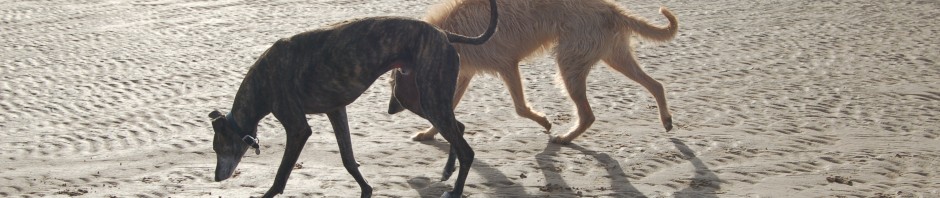
The household has a new pup; we have become a three dog household. The youngster is called Samwise, and is a lurcher joining Frodo and Pippin. We are going to hold auditions for the fourth member, Merry soon.

He is all the things a pup should be: curious, perplexing, humorous and hard work.

Samwise has arrived just in time for me to try not to be busy during Lent (www.notbusy.co.uk).

The website is linked with Stephen Cherry’s new book: Beyond Busyness: Time Wisdom for Ministry. The thrust of the initiative is to encourage us to spend (at least) 15 minutes a day during the holy feast of Lent doing nothing. This will be difficult for me. I fill my life with activity; and often I fall into the trap of believing I am defined by what I do. (None of my hounds do this incidentally, says he, making a connection where there is not one)

I have spent the day with 10 members of my church congregation at the Growing Churches conference. The key note speaker was Bob Jackson, who apart from many things was the vicar of a neighbouring parish when I was growing up. I thought he was quite brilliant. I enjoyed the workshops and the conversations with church members. I hope we will put into practice some of the day. For me, it will be about creating a culture of invitation where people are unafraid to share the story of Jesus; comfortable that he is their saviour and lord.

Posted in Uncategorized | 1 Comment

Frodo’s Way: Pippin’s grace

Another one, so another blog recommendation: http://kingdompoets.blogspot.co.uk/

Frodo’s recovery is in a large part down to his brother, Pippin. They are littermates, and had never been apart until the two nights Frodo was in the vet hospital recovering from his operation.

Pippin was a tad suspicious of Frodo when he arrived home; not because of three legs, but because he spelt of vets.

Pippin has allowed Frodo still to be top dog. He has done this by allowing Frodo still to be Frodo. I think he has been able to do this by still being Pippin.

DSC_0039

It never ceases to amaze me that I learn so much from animals. How often we can inhibit what others can be by not being ourselves. A question for me on this Saturday evening.

Posted in Uncategorized | 3 Comments

Frodo’s Way: Thriving

Once again let me point you in the direction of another blog, if you find it difficult to cope with animals and theological reflection. This one is particularly good, http://philgroom.wordpress.com/tag/phil-groom/ and I commend it to you.

It is now 51 days since Frodo has his back right leg amputated due to bone cancer. He is thriving.

DSC_0084

This is him this morning – yawning in the snow after a hard night before. Hard being a vicar’s dog.

Thriving? After all, here is a dog who is a greyhound/deerhound lurcher who is used to chasing around with his brother, running through fields, streams and woods. Admittedly, that was easier to do when I was in Cumbria. Frodo, unlike my rotund self, is an athlete.

He is thriving in that he is eating, sleeping, walking, running (yes in the snow this has been the case), chasing feline creatures and enjoying the attention of Bartley Green.

Frodo seems to be content to do all that he can do, without (it seems) lamenting what he cannot do. As always, dogs seem to have the knack of putting their paw on something.

I have wasted a lot of life admiring others and wanting to be like them. I have sometimes strained too much to do what I cannot do, and therefore lost sight of my own abilities and end up not doing those things that I am good at.

If only I understood that to thrive does not mean to be perfect.

Posted in Uncategorized | 1 Comment

Frodo’s Way: normality

In keeping with my last two blogs, let me offer readers an alternative, if they do not wish to hear my ramblings about Frodo, my long-haired lurcher, who recently had a his right back leg amputated. The aptly named www.theblogofkevin.wordpress.com is a very worthwhile alternative read.

For the record, Frodo is doing well, and so am I. His canine brother, Pippin has also adjusted, and if you were to see them jostle and play fight, you might for a moment not notice anything had actually happened.

Sunday (30 December 2012) saw me do three dog walks. One with all three of us, one with Frodo trotting around Bartley reservoir and the other with Pippin on the Clent Hills. It was good to blow the cobwebs away. As Pippin ran, as mad as a hatter, after one leaf or another, I was slightly sad, noting to myself that Frodo will not be able to that again. That is in all possibility true, although there are number of things the vet decreed that he would not be able to do that he already has done. But it does not make him less of a dog than his brother, or less capable of enjoying life. That is a judgement that I make, not him.

I do need to be careful lest I ask him to do too much. He will do so. But he runs around the garden, greets people at the door, delivers letters to the post box, and was playing (with ease) with a Jack Russell by the reservoir on New Year’s Day. He still has the same eyes that can convince me to do anything. He does not know (I don’t think) that the cancer will return in all probability. For now he is the same, except he is not.

It seems to me that it is I who limit him. This is not in terms of walking and allowing him to play; but rather my mind seems to have developing a disturbing inflexibility as to what should be considered ‘normal’. Indeed, the first few times we walked together in the day-light, I was conscious of lots of people looking at us, and imputed lots of negative thoughts, which were in reality mine and probably mine alone. Most people do not even see that he has three rather than four legs. Most do not pass judgement on what sort of owner I am, although perhaps some do. It is the normal scheme of things that this is the case.

As, I think about Frodo, I am also aware about how many other things in life I have considered normal or decreed not to be. I wonder how to begin to address those things.  Then, in a moment or two inspiration, I am aware that my long-haired lurcher has learnt to live one moment at a time, and perhaps that will be a good place to start.

Posted in Uncategorized | 1 Comment

2012 in review

The WordPress.com stats helper monkeys prepared a 2012 annual report for this blog.

Here’s an excerpt:

600 people reached the top of Mt. Everest in 2012. This blog got about 3,500 views in 2012. If every person who reached the top of Mt. Everest viewed this blog, it would have taken 6 years to get that many views.

Click here to see the complete report.

Posted in Uncategorized | Leave a comment

Frodo’s way: adjusting

Continuing the theme of yesterday, if you struggle with self-indulgence you might like to try another blog. This one by a priest-farmer is very good: http://llanfach.blogspot.co.uk/

My reflections are based on the recovery of Frodo, my lurcher, from the amputation of his right back leg. He has ‘recovered’ comparatively well. This is because it would seem, to my human eyes at any rate, he has adjusted. He does not take on his brother in a race any more over distance; but can be there a shade quicker for food and to the end of the garden. Pippin, Frodo’s brother and my other lurcher, has also adjusted. Pippin and Frodo used to live for running, chasing the wind, leaves, raindrops, cobwebs, rabbits etc. At least, that is what I thought. They however I think were living to play in their doggish kind of ways, rather than to chase. They can not play in the same kind of way, but they still play. Or perhaps even there, I am assuming they cannot play in the same kind of way.

I have been reading on and off for a year, Stuart Brown’s book, Play: how it shapes the brain, opens the imagination and invigorates the soul. It is an amazing book, which I need to read properly. Brown studies play within the human and animal kingdoms. One of the key conclusions seems to be that in order to play, you need to be vulnerable. Such a conclusion does not seem to be earth shattering, for most forms of play require a range of people to take part. Certainly the two canine brothers seem to negotiate when running, chasing or even who is getting attention. This was the case before the trauma of Frodo’s cancer diagnosis. It is interesting that children play with very few problems. (As a parent, I know that there are the inevitable squabbles). Children also have few problems with vulnerability. An excellent book on this topic is David Jensen’s Graced Vulnerability: A Theology of Childhood.

Part of the ability to adapt in the way my lurcher has is to reassess. He knows there are certain things he cannot do, but also knows there is much he cannot do. Of course I have just humanised him. There is the point, for I am the one who is adapting. Frodo does not care what he looks like. He is bothered if I find it so difficult to look at the scars of the operation, which get less each day, that I cannot spend time with him. Dogs have a need to be loved and to be part of a pack. So long as he is in, he is fine.

I wonder whether I am much different. Frodo’s Way has begun to be a great journey. One that will surely be continued.

Posted in Uncategorized | Leave a comment

Frodo’s Way: Taking time to see

The next few blogs will be self-indulgent. Those who do not like such things should find another blog to read. Without reservation I can recommend, www.pilgrimpace.wordpress.com or www.thisestate.blogspot.co.uk should you need to escape from my thoughts.

The next few pieces (I cannot quantify a number) will use the recovery of Frodo, who is my long-haired lurcher dog. Frodo was found to have bone cancer in his back right leg. The vet gave us a clear choice: amputation or euthanasia. Frodo is recovering from the op, and can run relatively freely in the garden and by bartley green reservoir. It is harder given the waterlogged conditions of most places for a three legged hound to get around. Pippin, his canine brother and companion, just prefers not to go out in the rain and is waiting for me to turn off the rain.

Inevitably, Frodo is not perhaps as nimble as he was. He is though just as agile in many ways, he can jump in and out of the van; on to the sofa, push his way past his brother and navigate his way around the Lego Star Wars Death Star that is in construction in the Vicarage. He can still spot a feline personage in Vicarage territory, and still gives chase.

What I have noticed though is that he stops to sniff a whole lot more. Or perhaps the reality is that I allow him to sniff more, to add his own wee-mail to the assortment of smells canines leave behind. Indeed, he has caused me to change. A walk, when it is with Frodo, is now not a route march with the aim solely being getting from beginning to the end as quickly as possible. He cannot do that any more. Now we are going more slowly, I see and notice things more.  I see more people or rather people see my doggy companion and want to know what has happened. Together we are not going so fast that we miss things. That is not Frodo’s doing. I think it reasonable to assume that he would have been happy always to linger over smells and smiles far longer than I ever have been. It is perfectly possible that this dog knows more of how to be a dog than I know at times of how to be human. He is in his own doggy way challenging me to re-think what it means to be human.

It seems that at the heart of humanity should be vulnerability. This is not a new discovery. I hope because I have learnt this again from a loyal friend, I might have the courage to learn it deeply.

Such vulnerability involves walking slowly. Only in walking slowly will we be able to see fully and be seen at least partially. Time now for another walk with Frodo. For a couple of weeks after his operation, I referred to him as the three-legged wonder. That he is, but he has a name; for we are defined by who we are rather than by the perceived limitations of what we can and cannot do.


Posted in Uncategorized | 1 Comment

Confronting Self

At least two things have caused me to examine myself very carefully recently. One of which is the season of Christmas that we are about to enter, and the other is my dog, Frodo.

Frodo is a brilliant and loyal lurcher. He lives to chase the wind and for that matter anything else that moves. It was a hammer blow to discover that he had bone cancer in his back leg. We were left in no doubt that the options were to remove the leg, because it would shatter should he feel the need to chase something or jump on or off the sofa, or to have him put to sleep. We were not ready to have him put down, so he went through an operation to amputate. Within an hour, he was stood up. He jumps in and out of the van and can hop, skip and jump around the garden after his brother. The two things I have learnt are both about me.

The first is that I struggled with what the dog looked like. Vets like fairly aggressive shaving, but I was unsure what people would think of him and me. In a year of paralympian greatness, here I was struggling with having a canine companion that has a disability. I was very shocked.

The second is more obvious, but equally as telling. Frodo still bounces up to me in the morning to greet me. As far as I know he has no particular angst as to what he looks like. Indeed most of the time, I am quite happily adopt a scruffy state myself.  Just as importantly, he still chases the wind and lives for the moment. I have much to learn from him.

I trust this Christmas time will help us all to look at ourselves, our opinions and where necessary re-examine them.

Posted in Uncategorized | Leave a comment

Redefinitions of kingship: a sermon for the feast

We all have our default images of what things should be like. When I was training for ordination, I spent much time at St Mary and St Ambrose Church, Edgbaston. The Revd Hilary Savage was the priest-in-charge. As part of my placement, she took me into school. In one class, Hilary explained that I was training to be a vicar just like she was. One little girl looked me carefully up and down, and asked a question that causes a chuckle to this day; ‘Reverend Hilary, how can a man be a vicar?’ The little girl had only ever experienced Hilary’s ministry, and therefore to a certain extent her imagination of what might be was not as free as it perhaps later would be.

Pontius Pilate, who were are all too familiar with from the Passion narratives and creedal statements seems to be someone whose imagination is not as free as it might be. Pilate would have had his own default image as to what a king was like. He would have seen how effective and indeed brutal the exercise of authority could be by Caesar. Pilate himself was dependent on the largesse or whim of his Emperor for his own position. A position that had been given, but just as easily taken away if Caesar was not content with how the procurator exercised Caesar’s power. Pilate had no power but that of Caesar.

The prisoner who was before him, Jesus of Nazareth did not fit any image of what it meant to be a king; and yet Jesus stood before Pilate because others claimed that Jesus had asserted that he was the king of the Jews. In the interchange between Pilate and Jesus it is clear that they are at cross purposes and only Jesus knows it. To the question, are you a king? Jesus tells Pilate that his kingdom is not of the world. His kingdom therefore does not conform to the default setting. Pilate returns to his question, are you a king? The limits of his imagination are confined by his experience; possibilities of ways of being a king are corseted and constrained. Pilate it might be said would stop at nothing to stamp out change. This clash of conflicting views of the world made the death of Jesus inevitable.

Not long after the resurrection of Jesus, early Christians looked for ways of understanding how Jesus could be described as king. A man hung upon a cross was not – and is not – the likeliest of candidates for being described as the ruler of the kings of the earth. Nevertheless, this is how the author of Revelation to St John the Divine describes Jesus.

How did this happen? First, their imaginations were engaged. They were part of a group who had experienced Jesus had been risen from the dead. In the darkest of moments, the resurrection changed – and still has the potential to change – everything. As my wife’s husband is fond of saying: ‘many things can make us look, but only experience can make us see’. Second their imaginations began to wrestle with the scriptures that shaped and sustained them looking for vocabulary to explain what had happened.

It was through this they came to book of Daniel, and with it the story of the one like a son of man being vested with power and authority. Daniel was writing to a group exiled and disenfranchised who found hope in that their champion was to exercise authority alongside God. Stories as we saw last week nourish hope and create infinite possibilities. A champion who was from heaven enabled those in exile to begin to see themselves as God’s people once again. The early Christians were able to explore ideas of the one who was given power and authority and speak of Jesus in that way. This in and of itself is incredible. However it was not the most important discovery and assertion that the early Christians made.

Those Christians not only believed that Jesus was the king, but that he had changed what it meant to be king; and enabled all sorts of re-imaginations to happen. This refashioning of what it meant to be king happened on a number of levels. It is there if we sit in the text of Revelation, this ruler of the kings of the earth is also the faithful witness or to make the Greek explicit the ‘true martyr’ and also the first born from the dead. In the Revelation, power is always shown through weakness and vulnerability. Instead of the roaring lion one might expect, the image thrown up is of the lamb that was slain. It is to this figure rather than Caesar than Christians owe their allegiance.

The kingdom that Jesus offered is one that is open to all regardless we might say of who they are or where they come from. It is a kingdom that is shaped by the early baptismal formula proclaimed as the newly baptised emerged from the waters: There is neither Jew nor Greek, there is neither slave nor free, there is no male and female, for you are all one in Christ Jesus. It is a place where Gentiles and Jews learnt to worship, minister and share life alongside each other, even though at times that was contentious and difficult. It is a place where slaves like Onesimus were useful to masters like Philemon, becoming family rather than possessions. It is a place where a woman called Lydia could minister and encourage a man called Paul, where Mary of Nazareth could teach the Scriptures to the Son of God; and Junia and Priscilla could exercise episcope alongside their male colleagues. It is a place where gifting, calling and vocation are more important than ethnicity, class, gender or academic achievement. This is possible because the kingship of Jesus was envisaged as being different. The imaginations of the first Christians were set free in the way they interacted and wrestled with both their sacred stories and the contexts in which they found themselves.

I wonder what our default patterns are today. Do they constrain us or set us free; do they give us life or crush our spirits. Do they give us room to imagine what might be and create hope?

As we enter into a week of mission, it is my prayer that we will have our imaginations stirred as to what might be possible, that we will delight in the company of fellow-citizens of the kingdom from around the globe, and we will take risks in terms of invitation and hospitality as we seek to follow the path of the servant king; knowing that he first invited us and made us welcome.


Posted in Uncategorized | Leave a comment