Hope and Defiance

Like many others, I lit a candle in the window on the evening of Mothering Sunday in hope. Light is a good thing. It dispels darkness and also shows up what the darkness conceals.

Quite rightly, people lit their candles in hope. Hope is a beautiful thing. Indeed, as someone from one of the Star Wars films said, ‘Hope is what rebellions are built on’. I lit mine in defiance as well.

That met with some interesting comments on Twitter. My interlocuters thought that defiance was a negative expression, and I should be channelling all my energies into the positivity of hope. Such an argument does not for me chime with what I understand to be the hope fashioned by the Christian faith. I am not hopeful because we will get through this; I anticipate we will. Sadly, we will lose a number of people. Disease does that.

I am defiant because it comes out lament. Lament allows for expressions of anger, frustration and defiance. Lament prompts action, both spiritual and physical.

Therefore, I lit the candle with defiance and in hope

Posted in Uncategorized | Leave a comment

Sermon/Bregeth i Mothering Sunday/Sul y Mam

Yn Saesneg yn gyntaf yna Cymraeg

Mothering Sunday (22 March 2020)

Exodus 2:1-10, Psalm 34, 2 Corinthians 1:3-7 and John 19:25-27

I don’t think I ever in my wildest dreams imagined that I would write a sermon in these circumstances and send it out virtually rather than stand before people and engage with them. Covid-19 has changed lots of things. Indeed, almost everything. Before I look at the biblical texts, which I have also sent out and posted. Let me say one practical thing. It really is so important to socially keep our distance physically. There are ways of keeping close in other ways: phone, cards, letters and the opportunities on-line; and of course, there is also the wave or the smile that brightens each day. Let us not fall into the trap of believing that this disease cannot touch us. That would be silly.

The reading from the Hebrew Bible is from Exodus. It is the story of the birth of Moses, and how his mother placed him in the basket on the river Nile, and his discovery by the daughter of the Pharaoh. There are several elements to this story, the mother’s love that took the extraordinary risk to save her son. The daughter of the Pharaoh saving the life of the boy, who had been condemned to death. We cannot avoid that at the heart of the story is a tyrant who wishes to preserve his power, and a God who wants to liberate his people. It is unsurprising that the Exodus has stimulated the imaginations and spirits of liberation theologians working in Africa and Latin America. Not in our passage are the midwives who had defied the Pharaoh and saved the lives of many. Midwives may not naturally be subversive. But they were. In this present crisis, little acts of kindness can be subversive. The Christian faith has been at its best when it has been radical and recognised that the church exists for those who are not naturally seen as part of it. I wonder even when we are keeping our physical distance, who can you reach out to?

The reading from the Gospel takes us to the foot of the cross where Jesus’ mother and one of his closest friends are watching and waiting. Jesus entrusts each to the other. He could have rightly expected his brother James to have cared for his mother. Jesus always broke boundaries and continues to do so today. I have observed some wonderful things this week as people have supported each other. In Amlwch, children are being encouraged to draw and paint pictures to display in the windows of their houses just to make people smile as they go passed. We need to respect the rules of social distancing, but we can continue to follow the way of Jesus by not passing by on the other side, and yes, inconveniencing ourselves to help others. There is more to family than blood.

The Apostle Paul is writing to the scattered and besieged communities in and around Corinth. He wants to encourage them that in their suffering they are consoled by God. I hope that this is something that Christian people can hang on to. If I might digress for a moment, I have read some awful things online about the Coronavirus and God. This virus is not from God in any way, shape or form. To argue that is to misunderstand the God who we worship completely. It is false news.

When I was reading the passage, I initially misread ‘our hope for you is unshaken’ as ‘our hope is unshaken’. My hopes this week were challenged as my wife was taken to hospital. She was not admitted, although it was a scary 48 hours. Hope is important. Paul does suggest that those who are suffering will be consoled. I grew up in Sheffield with the stories of the Derbyshire village of Eyam. It was about how in another time of pandemic; a village chose to isolate itself and keep itself at a distance. All people of goodwill were involved in leading the village: political, community and religious leaders. It was a costly experiment. The vicar in Eyam spoke much about hope, compassion and generosity.

And so, we come to the Psalm. The psalms are a book of song that encompass every part of human emotion from sorrow to joy, mourning to dancing. The writer declares: ‘The Lord is near to the broken-hearted and saves those who are crushed in spirit’. many people are despondent at this time. Some of us are worried, even scared. We can get through this if we stand together.

We do this by radical acts of kindness: the smile and wave, as well as the letter and the food parcel. Most importantly we can pray. On Sunday evening (22 March 2020), I invite you to join with people of faith around the British Isles to light a candle, placing it carefully in your window as a sign of defiance against the darkness of the coronavirus. Each day at 12 Noon, I also invite you stop and breathe, reflecting on all that is happening and say the Lord’s prayer as an act of faith, hope and love.

The names of Moses mother and Pharaoh’s daughter are not mentioned. They were different people: one a princess, the other a slave, one Jew and the other an Egyptian. Both were thrown together by the baby in the basket. This strange time will see us appreciate each other in different ways. May we dare to rise to the challenge of being different and to respond to call to be subversive, this Mothering Sunday and always.

Questions to think about

  1. Which of the passages speaks to you and why? Why not share your answer with another member of the congregation. Pick up the phone or send a card or email.
  • What subversive act of kindness could you do?

Activity

Write a letter to someone who needs it.

Prayer

Pray for our health care professionals

Sul y Mamau (22 Mawrth 2020)

Exodus 2:1-10, Salm 34, 2 Corinthiad 1:3-7 and Ioan 19:25-27

Nid wyf yn credu imi ddychmygu erioed y byddwn yn ysgrifennu pregeth o dan yr amgylchiadau hyn a’i hanfon allan yn hytrach na sefyll o flaen pobl ac ymgysylltu â nhw. Mae Covid-19 wedi newid llawer o bethau. Mewn gwirionedd, bron popeth. Cyn i mi edrych ar y testunau Beiblaidd, rwyf hefyd wedi eu hanfon. Gadewch imi ddweud un peth ymarferol. Mae mor bwysig mewn gwirionedd cadw ein pellter yn gorfforol. Mae yna ffyrdd i aros yn agos mewn ffyrdd eraill: ffôn, cardiau, llythyrau a’r cyfleoedd ar-lein; ac wrth gwrs, mae yna hefyd y don neu’r wên a all oleuo diwrnod rhywun. Peidiwn â syrthio i’r fagl o gredu na all y clefyd hwn ein cyffwrdd. Byddai hynny’n wirion.

Daw darlleniad y Beibl Hebraeg o Exodus. Hanes genedigaeth Moses ydyw, a sut y gosododd ei fam ef yn y fasged ar afon Nile, a’i ddarganfyddiad gan ferch y Pharo. Mae yna sawl elfen i’r stori hon, cariad y fam a gymerodd y risg anhygoel i achub ei mab. Fe arbedodd merch Pharo fywyd y bachgen.

Ni allwn osgoi hynny wrth wraidd y stori mae teyrn sydd eisiau amddiffyn ei rym, a Duw sydd am ryddhau ei bobl. Nid yw’n syndod bod yr Exodus wedi ysgogi dychymyg ac ysbryd diwinyddion rhyddhad sy’n gweithio yn Affrica ac America Ladin. Roedd y bydwragedd a heriodd y Pharo ac achub bywydau llawer yn arwyr. Efallai na fydd bydwragedd yn wrthryfelwyr naturiol. Ond roedden nhw. Yn yr argyfwng presennol hwn, mae llawer o weithredoedd caredigrwydd yn ymddangos yn wrthryfelgar. Mae’r ffydd Gristnogol wedi bod ar ei gorau pan fu’n radical a chydnabod bod yr eglwys yn bodoli ar gyfer y rhai nad ydyn nhw’n cael eu hystyried yn naturiol yn rhan ohoni. Tybed hyd yn oed pan fyddwn yn cadw ein pellter corfforol, at bwy allwch chi estyn allan?

Mae darlleniad yr Efengyl yn mynd â ni at droed y groes lle mae mam Iesu ac un o’i ffrindiau agosaf yn gwylio ac yn aros. Mae Iesu’n ymddiried yn y llall. Gallai fod wedi disgwyl i’w frawd James fod wedi gofalu am ei fam. Roedd Iesu bob amser yn torri ffiniau ac yn parhau i wneud hynny heddiw. Rwyf wedi arsylwi rhai pethau rhyfeddol yr wythnos hon gan fod pobl wedi cefnogi ei gilydd. Yn Amlwch, anogir plant i dynnu a phaentio lluniau i’w harddangos yn ffenestri eu tai i wneud i bobl wenu wrth iddynt basio. Mae angen i ni barchu rheolau pellter cymdeithasol, ond gallwn ni ddilyn ffordd Iesu o hyd trwy beidio â phasio’r ochr arall, ac ie, anghyfleustra ein hunain i helpu eraill. Mae mwy i deulu na gwaed.

Mae’r Apostol Paul yn ysgrifennu at y cymunedau gwasgaredig a dan warchae yng Nghorinth a’r cyffiniau. Mae am eu hannog i gael eu cysuro gan Dduw yn eu dioddefaint. Gobeithio bod hyn yn rhywbeth y gall pobl Gristnogol ei hongian. Esgusodwch fi, os byddaf yn crwydro i ffwrdd am eiliad, rwyf wedi darllen rhai pethau erchyll ar-lein am y Coronafirws a Duw. Nid yw’r firws hwn gan Dduw mewn unrhyw ffordd, siâp na ffurf. Dadlau hynny yw camddeall yn llwyr y Duw rydyn ni’n ei addoli. Mae’n newyddion ffug.

Pan oeddwn yn darllen y darn, fe wnes i gamddarllen i ddechrau ‘nid yw ein gobaith amdanoch chi wedi’i dorri’ gan ‘nad yw ein gobaith wedi’i dorri’. Heriwyd fy ngobeithion yr wythnos hon wrth i’m gwraig gael ei chludo i’r ysbyty. Ni chafodd ei derbyn i’r ysbyty, er ei bod yn 48 awr frawychus. Mae gobaith yn bwysig. Mae Paul yn awgrymu y bydd y rhai sy’n dioddef yn cael eu cysuro. Cefais fy magu yn Sheffield gyda straeon pentref Eyam yn Swydd Derby. Roedd yn ymwneud â sut mewn cyfnod arall o bandemig; dewisodd pentref ynysu ei hun a chadw ei hun o bell. Roedd pawb o ewyllys da yn ymwneud ag arwain y pentref: arweinwyr gwleidyddol, cymunedol a chrefyddol. Roedd yn arbrawf costus. Siaradodd y ficer yn Eyam lawer am obaith, tosturi a haelioni.

Ac felly, rydyn ni’n dod at y Salm. Llyfr o gân yw’r salmau sy’n cwmpasu pob rhan o emosiwn dynol o dristwch i lawenydd, galaru i ddawnsio. Mae’r ysgrifennwr yn datgan: ‘Mae’r Arglwydd yn agos at y rhai toredig ac yn achub y rhai sy’n cael eu malu mewn ysbryd’. mae llawer o bobl yn ddigalon ar yr adeg hon. Mae rhai ohonom ni’n poeni, hyd yn oed yn ofnus. Gallwn fynd trwy hyn os ydym yn sefyll gyda’n gilydd.

Rydyn ni’n gwneud hyn trwy weithredoedd radical o garedigrwydd: y wên a’r don, yn ogystal â’r llythyren a’r parsel bwyd. Yn bwysicaf oll gallwn weddïo. Nos Sul (22 Mawrth 2020), fe’ch gwahoddaf i ymuno â phobl ffydd o amgylch Ynysoedd Prydain i gynnau cannwyll, gan ei gosod yn eich ffenestr yn ofalus fel arwydd o herfeiddiad yn erbyn tywyllwch y coronafirws. Bob dydd am hanner dydd, rwyf hefyd yn eich gwahodd i stopio ac anadlu, gan fyfyrio ar bopeth sy’n digwydd a dweud gweddi’r Arglwydd fel gweithred o ffydd, gobaith a chariad.

Ni chrybwyllir enwau mam Moses a merch Pharo. Roeddent yn bobl wahanol: un yn dywysoges, un yn gaethwas, un yn Iddew a’r llall yn Aifft. Cafodd y ddau eu taflu at ei gilydd gan y babi yn y fasged. Bydd yr amser rhyfedd hwn yn ein gweld ni’n gwerthfawrogi ein gilydd mewn gwahanol ffyrdd. Gawn ni feiddio ymateb i’r her o fod yn wahanol ac ymateb i alwad i fod yn wrthryfelwyr, Sul y Mamau hwn a bob amser.

Cwestiynau i feddwl amdanynt

  1. Pa un o’r darnau sy’n siarad â chi a pham? Beth am rannu’ch ateb ag aelod arall o’r gynulleidfa. Codwch y ffôn neu anfonwch gerdyn neu e-bost.
  • Pa weithred subversive o garedigrwydd allech chi ei wneud?

Gweithgaredd

Ysgrifennwch lythyr at rywun sydd ei angen.

Gweddi

Gweddïwch dros ein gweithwyr proffesiynol gofal iechyd

Posted in Uncategorized | Leave a comment

Preparing for Sunday

Mothers’ Day, or my mum used to insist Mothering Sunday 2020 will be a day like no other. Partially. I hope many mums will receive breakfast in bed, some of which will be delicious to taste, and others will be delicious because of who made it. Mine always fell into the latter category.

I imagine flowers will still be placed in church yards and cemeteries. I will look again at some of the photos I have of my mum.

And yet, people will not travel, and usually at this time on Saturday evening, I have a number of bibles surrounding me as I wrestle with the text preparing for Sunday. I have prepared for Sunday. I have written the homily already to be sent round the email loop, put on Facebook and on this blog. It has questions to reflect upon and an activity.

Yet for the first time in a very long time I will not be going to public worship either as the leader or as a member of the congregation. Church doors will not be open. I will not be with the people who I am among to serve.

Now the Church is not a building but the people, but places are special, and in some bizarre way that I want to resist at times embraces memories of times and events.

It will be a Sunday like no other. I will endeavour to do live stuff on Facebook…. and will light a candle at 7pm placing it carefully in the window as an act of defiance against the darkness of the coronavirus. I will phone, email and message people, aware of the fact that I don’t have addresses for some of the people.

It has been hard to prepare for this Sunday. It is hard to prepare for change. Somehow Sunday has become domesticated and tame, tomorrow it will be rather wild.

See you there.

Posted in Uncategorized | Tagged , , , , , | Leave a comment

Cancelled: dealing with being non-essential

One of the things I have learnt this week is this: I am not essential. It is true for everyone at some point.

My diary which was full is now rapidly emptying. I am needing to rediscover who I am and what it means to be a vicar, the Godbotherer, the God-person. Sometimes we clergy can look important by being at lots of meetings. The meetings have by and large been cancelled. The ones that are left in are there because I have not cancelled them yet.

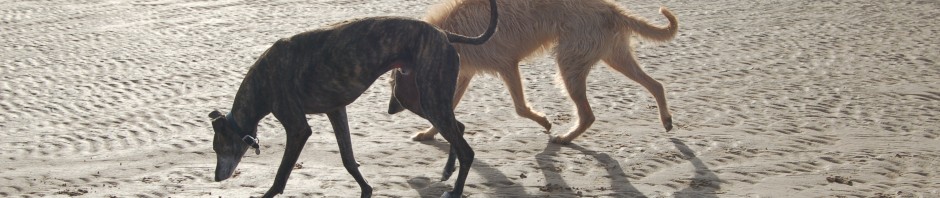
This enemy (see my blog on 18 March 2020) is redefining lots of things. It will redefine how we live and be. From my point of view, on Sunday morning, I will not be grabbing some coffee before going out to church after that is walking my beloved hounds. Public worship is suspended. There will be no running, driving, from one church to the other, nor for me the wondering as I preside at the eucharist for a fourth time whether I have prayed these words in this service before. I will endeavour to deliver some thoughts about Mothering Sunday on Facebook Live. I have never done that before. 10am on Sunday if you want to watch and laugh as this bookish cleric tries to negotiate a different world. I will light a candle of Sunday evening at 7pm with people of faith as an act of defiance against this invisible enemy.

As I rediscover afresh who I am and what I am meant to do, I will be praying, listening and watching. These were things that the things I thought were important squeezed out.

and after all this madness is over… I will probably still be non-essential…. and while this is a voyage of discovery, it hurts just a little.

Posted in Uncategorized | 1 Comment

Invisible Things

Those who read the blog yesterday, she is a lot better this evening, thanks

There are many thing visible in our communities that are disappearing for a while: clubs, social groups, schools, chapels and churches, even snooker halls. These communities have at different times been the heart beat of our societies/neighbourhoods.

As they disappear the invisible things that gave them birth like compassion, kindness and generosity will come to the foreground. These midwives, as it will, will help birth other things.

Stubborn, independent people like me will learn to be less independent , although probably not less stubborn. Someone brought us some shopping today – I was moved that they wanted to help. This is because I am far better at being the giver than the receiver. I need to learn from this.

More tomorrow….

Posted in Uncategorized | Leave a comment

The enemy

It is not melodramatic to call Covid-19 an enemy. My wife was taken to hospital today by ambulance. The paramedics were wonderful.

I have to say I cried when they pulled from the drive. I could not go with her, because if she has it, so do I. It’s almost like a game of tig, I said to the paramedic, ‘no one wants to be it’.

I prayed and called others to prayer. I don’t think I have a hotline to God or have a particular way in, I am more like a constant dripping tap. I imagine getting on God’s nerves, if that were possible. There it is then. Dodgy theology, perhaps.

This enemy causes us to think: what is life and asks how will you live?

I think when it passes, as it will, hopefully, how we live will change. Children born and growing up in the 2020s and 2030s will think and behave differently. They will do this because of the enemy, but also because of how we have been.

We are complex creatures: hoarders of too many bog rolls and then willing to protect the vulnerable by putting ourselves at risk: a mixture of dust and glory.

She was discharged – not ill enough for a bed.

Posted in Uncategorized | 1 Comment

At times like this

This is a scary time. It is OK to be afraid. It is OK to be vulnerable. Whatever this virus is, it is forcing how we see the world to change, for both good and ill.

I am a reader of the Scriptures. I hope that alongside reading them, that I wrestle and interpret them too. Thus the Psalm set for this morning is Psalm 9. Readings are set for each day for churches that follow a lectionary.

It begins: I will give thanks to you, Lord, with all my heart; I will tell of all your wonderful deeds.

It appears to clash with all that is going around us, in the light of a virus that is forcing the most social of beings (humans) to isolate and keep our distance.

Then again, the Bible has for me always been a source of challenge and critique. In the days that lie ahead. I will reflect a little each day on what this means for me in this context.

St Patrick’s Day 2020

Posted in Uncategorized | Leave a comment

I am afraid

My wife has some of the signs of Covid-19. We are therefore self-isolating. I have to admit I am afraid.

I am afraid of being ill. I might even be afraid of death. This is despite the fact that I am a vicar who sings Abide with me at nearly every funeral. It is not that I have lost my faith. It is just that as I look at the future I am scared.

I will hopefully write something on this blog daily, even if it is to say that we are OK.

Blessings on you – wherever you are.

Posted in Uncategorized | 1 Comment

My Messy Journey

I am currently the North Wales (West) Regional Co-ordinator for Messy Church. I love Messy Church. It has revolutionised my understanding of what it means to be Church.

My first encounter with Messy Church took place before I knew what Messy Church actually was.

I was a priest in Maryport, and in our very trad church we started doing half-term activities with families, and that developed into something called First@4. It involved crafts, worship and food. This was in 2005.

I have been involved in Messy Church in Maryport, Birmingham, Holyhead, Amlwch and Llannerchymedd

Messy Church works because there is both a formula and flexibility. We have had the Eucharist in Messy Church, although arguable all our meals are eucharistic in nature. We discover things about each other. And for me I have discovered the joy of team.

Messy Church does not fit anywhere and because of that fits everywhere. It cannot be boxed. It is of the Kingdom

Thanks Lucy, Jane, Martyn (never retired) and a countless army of others for your support and kindness

Posted in Uncategorized | Leave a comment

Doing practical theology in a different tongue: Are my identities different when I do so?

Bilingual Context

 It is a pleasant summer morning, and I am walking my lurcher dogs through my town of Amlwch, which is the most northerly town on the island of Anglesey, indeed in Wales a whole. Periodically, when I am tuned in, I greet people

Good Morning

Bore da

Mae’n braf

Mae’n lyfli (lovely)

Bore da

Bore da. Mae hi’n braf

It’s nice, yeah.

It is a bilingual community, and Welsh and English are used interchangeably. Anglesey, with its neighbouring county, Gwynedd, have a higher proportion of first language Welsh speakers than the rest of Wales.[1]

The Learning Context

I am an avid learner. At present not only I am working towards a PhD, but I am learning the Welsh language. I am hooked. I began my learning in Learn Welsh’s Ysgol Haf (Summer School) in July 2014 and have spent every Friday in a Welsh Class from September of that year. I have followed the Wlpan programme, thus having completed Wlpan, Pellach, Pontio and about to embark on Uwch.

These courses were inspired by the revival of Hebrew in Israel. Following the Second World War, intensive Hebrew Ulpan courses were established in Israel to cater for the large influx of immigrants from different countries…One of the course tutors, Shoshana Eytan, was invited to Wales in 1972 to discuss her experiences, and in 1973 the first Welsh Wlpan course was established in Cardiff.[2]

While the methodology is similar with the concentration on linguistic building blocks, specific patterns and encouragement to take what we know into the wider community, the contexts of the two situations are different. The Welsh Wlpan is part of a strategy to revive the Welsh language. Crowe argues the Welsh Wlpan is more ‘on the offensive’ and exists in a context where very few learners learn the language for practical reasons.[3]

I would place myself in the category of those who need to learn on both a practical and theological level. I learn so I can communicate in the mother tongue of the majority of those I live and work amongst. The ethnographer, Carol Trosset also learned Welsh following the Wlpan model in 1981/1982. At that time, she described Welsh as a ‘dying language’.[4] It would difficult to describe the language thus at the end of the second decade of the twenty first century. Unlike Trosset, I am a priest-theologian and sit comfortably on the evangelical side of the Church in Wales, I therefore want to speak to people about their faith in their mother tongue. I am to some extent a missionary.

I am the Vicar of Bro Eleth which covers the north west of the Island including the towns of Amlwch, Llannerch-y-medd and Moelfre. The first two with populations of 3500 and 2100 respectively have 66% and 80% first language welsh speakers. In Wales the population just under 19% of the population claim to speak Welsh. Moelfre, which is approximately five miles away from Amlwch, with a population of around 1400 is a little different, with under 30% of the inhabitants able to speak Welsh. Thus, in the towns of Amlwch and Llannerch-y-medd life can be transacted solely in Welsh, in terms of conversation, business, education, shopping, entertainment and worship. This is not to say that it is the case all of the time, and indeed if a visitor to the area tuned into the conversations going on, they would hear switching between the two official languages of Wales, often it seems to be almost unconsciously, rather than the almost mythical assumption that when an English person walks into a pub or shop, the conversation deliberately switches to Welsh for the sole purpose of excluding the other.

I have been known to sometimes tweet in Welsh, spending far too long in doing so and to blog my sermons, which are being read by other Welsh learners. I also try to read novels aimed at Welsh learners. Learning a language spoken by a sizable proportion of the people who live around me takes a significant amount of my time

I find that I augment my class based learning by using the web, indeed periodically, I receive emails from Duolingo informing me that I had made it sad because I had not engaged with its internet-based learning for several days. I put aside the funeral preparation and spent the next twenty minutes clicking and learning. Many learners use social media either to augment their face to face learning or learn solely on the web (e.g., Say Something in Welsh).[5] Ann Jones has led a study on the use of various social media platforms for those learning Welsh.

It found that most learners use tools for sharing media and resources, for chatting and interacting with other learners, social networks and microblogging. Which social media they used and how, varied, so for example only the more experienced learners blogged, although a number used twitter, chat or email.[6]

I am not alone amongst my clergy colleagues on the Island, several of us are Welsh learners. Price, when writing his history of the Church in Wales since disestablishment, notes regarding the Diocese of Bangor, ‘some priests have learnt Welsh and they serve in an increasing number of parishes’[7] He goes on

It is difficult to see how there can be really effective pastoral ministry… until more native speakers of Welsh come forward for ordination’.[8]

Price is right on both a pastoral and missiological level, those who are first language Welsh should be served by clergy who are cut from the same cloth. Yet, part of me experiences a certain grumpiness to the assumption that I cannot provide ‘really effective pastoral ministry’. It is true that when I began to learn the language, I stumbled and often fell in terms of mispronouncing words and then getting the meanings of words wrong. My experience has been up to now one of gratitude, and often amazement, at my commitment.

If only some others thought the same way is an oft repeated comment

The Learning Experience

My experience is not universal. Learn Welsh courses throughout Wales, are currently being reviewed to ensure that the dovetail with the Welsh Assembly’s declared intention of 1 million Welsh speakers by 2020. One of the initial reviews noted simply

Hostility, reluctance or embarrassment from native speakers will easily discourage learners. Therefore, it will be helpful to encourage native speakers to become more involved in the development of learners as successful speakers of Welsh.[9]

Trosset is helpful here with her own observation of learning the language:

Another problem with speaking to learners is that language learners are essentially like small children in their linguistic ability: they need to be spoken to simply, to have a chance to repeat what is said to them, and to be corrected when they make mistakes.[10]

This is my experience. There are still first language Welsh speakers who I am unable to hold a meaningful conversation in Welsh with because I do not want to make a mistake in front of them. This is because to do so seems to be offensive. Language and identity are inextricably linked.[11] Of primary importance it is essential to note that it is too simplistic to say that ‘to be Welsh means to be Welsh-speaking’. Daniel Evans’s auto/ethnographic study of Porthcawl, situated as it is in what is described as British Wales speaks both of a love of the language that they do not speak and a strong Welsh identity.[12]

I have not only had to learn just a language, but to enter what is a different culture. Again, I find certain echoes, but some dissimilarities, in my own experience in Trosset’s journey as a learner.

On more than one occasion I was described as ‘the Welshwoman (Cymraes) from Ohio’. This is possible because, at its most fundamental level, to be Welsh means to be Welsh speaking. This was demonstrated in a conversation I overheard among three native Welsh speakers, concerning the girlfriend of a friend of theirs. One of them asked (in Welsh), ‘is she a Cymraes?’ The second replied, ‘I don’t know – she’s learned Welsh, anyway’, at which the third declared flatly, ‘Cymraes, therefore’. In fact, the two terms “Welsh” (nationality) and “Welsh speaker” are the same word in the Welsh language: Cymrol Cymraes. To ask “Cymro ydy o?” is to ask both ‘Is he a Welshman?’ and ‘Does he speak Welsh?’[13]

The dissimilarities in our experiences may revolve around the fact of gender and role, as well as the fact that Trosset was not rooted in a place. Moreover, I am an Englishman, while Trosset is American, which means that I am confronted by the histories of the complex relationships between England and Wales in a way that Trosset is not. Yet, just as Trosset is given honorary Welsh status at times, in Llannerch-y-medd, I am known as the English vicar ‘who belongs to us’.

There is a difference in time as well. Since 1981, what has been described as the passive revolution of devolution as happened,[14] with a general consensus that the process of devolution as engendered greater confidence in terms of what it means to be Welsh, although Evans uses the word interregnum for where he understand Wales to be at the moment. He notes that in many ways’ life continues for Wales in the same way as it did before devolution occurred. The Welsh Assembly administration has less power than its Scottish counterpart, and support for independence in Wales has not yet attained some of the statistical heights as it does within Scotland. Nevertheless, it would not be accurate to assume that nothing has happened. The desire for independence is not as prevalent, despite the fact that there is a greater curiosity about its possibilities, fuelled by the behemoth that is Brexit. Wales, like its neighbour, but unlike its Celtic cousins voted to leave rather than to remain.

Sophie Williams recent study comparing the experiences of national identity in Wales and the Basque Country because of their status as stateless nations offers us further material upon which to reflect.[15] Like Trosset before her, Williams draws on the work of Denis Balsom’s three Wales model dividing the country into three: British Wales, Welsh Wales and Y Fro Cymraeg.[16]

This does not appear to work as a singular model on Anglesey. Both Amlwch and Llannerch-y-medd fit comfortably within Y Fro Cymraeg, and yet even within these towns there would be different expressions of Welshness.

‘Being Welsh is about having an identity: that identity is expressed in language, rugby and the slate’. (Janet Sheffield, Tutor, Isle of Anglesey County Council)

Janet is from the town of Blaenau Ffestiniog, which is shaped by its relationship with the slate quarries.

‘I do not use the language in my daily life. If you bless me in Welsh alone, I am not blessed’ – (Ruth Owen, retired farmer)

Ruth is Anglesey born and has never left Wales

Williams used focus qualitative focus groups in Wales, rooted in Balsom’s three areas. Williams writes,

Broadly speaking, therefore, conceptualisations of Welshness coalesce around five main elements: an intangible sense of Welshness as a feeling; a sense of pride in that feeling; a sense of self and identity; a sense of difference from others; and a sense of belonging to a place. Throughout, the subjective nature of these conceptualisations is apparent, as is the conflict between self-identification and external categorisation and the arbitrary way of applying the latter, with place of birth and family background key influences.[17]

There are degrees over overlap between Williams’s conclusions and Trosset’s earlier ethnographic research. Trosset observed that certain definitions of Welsh social identity, are hegemonic in Welsh culture. These concepts are egalitarianism, martyrdom, performance, and emotionalism.[18] Whilst, Trosset focused her research on contexts that are predominantly Welsh speaking her overall conclusions were re-confirmed in collaboration with Caulkins.[19]

Not unusually, those interviewed, by Trosset, Trosset and Caulkins, and now Williams who are first language Welsh deemed knowledge of the language as important to their identity as Welsh people. More surprisingly is the assertion that those from England can become Welsh if they learn the language. This is not to say that those who were born in Wales are deemed not to be Welsh. An example of a conversation that took place in Llanystumdwy will suffice to underline the point.

P7: I will never, ever be accepted as Welsh… we can have people who come over to England, or Britain, and they get citizenship…you can’t move to Wales and say I have dual nationality, if you move to Wales from England, you’re English, and that’s it

P6: You can if you become fluent in Welsh…

M: So, what does that mean for somebody like me that’s Welsh, but doesn’t

speak Welsh?

P4: Well, you are Welsh

M: I’m Welsh because I was born here already, so I don’t need to prove

myself as Welsh by learning the language?

P4 and P6: No

M: Whereas an English person would have to prove it and learn the

language?

P2: Ie, dw i’n cytuno [Yes, I agree][20]

When Williams tests this hypothesis further, there is a degree of scepticism as to whether firstly an English person would be sincere enough to become Welsh, and indeed evidence of suspicion as to why someone from England would consider themselves to be Welsh.[21] Consistent across the three groups in Williams’s research is the framing of what it means to be Welsh over and against what it means to be English, or what is perceived as being English. For just as Williams’s research acknowledges that there is a continuum of what Welshness might mean, the same must be said of being English. The regional differences between the North East of England and Greater London are as pronounced as the differences between Swansea and Holyhead. Indeed, it may be that at one level the commonalities between a docker on the Humber are greater with a docker in Swansea than between the shop owner in Cardiff and the farmer on the Llyn Peninsular.

However, when we view this the other way around, what does the learning of and operating within a second language do to the individual who is the learner. First, I have found that language cannot be separated from culture, it is not learnt in an isolated sanitised way. It has been important to me to begin to grapple with some of the issues of being English in Wales. Second, as Robin Mann has noted

In attempting to accommodate and use Welsh in public, learners will often experience feelings of embarrassment and awkwardness.[22]

This is particularly acute for someone like me who is leading worship, speaking or attempting to chair a meeting. Whilst at the beginning, these can be laughed at, as I must get used to fact that I communicate differently in my mother tongue. I relish speaking without notes, but in Welsh much more must be scripted.

Thus, in school assemblies, I have begun incorrectly for 18 months. I am aware that hogyn and hogan are boy and girl respectively. I had learnt from watching the rugby or football, then hogia is boys. Thus, I deduced that hogannau must be girls, when it is in fact on Anglesey, gennod. Each act of worship in school has begun with me saying, ‘Bore da Hogia. Bore da Hogannau’. There has been uncorrected for several reasons. First, because everyone understood what I had said. Second, a sense of empathy with me for trying to learn, and third a reluctance to offer correction. This is true of adults, children had no problem in telling me that Jesus did not fly into Jerusalem on the donkey.

My identity

Mann notes further that a commonality faced by all learners is ‘a sense of being or feeling like an outsider in relation to an experience of attempting to speak Welsh’.[23] Trosset’s earlier study touched on this, suggesting that the learner in Wales is regarded as different.

Being a language learner does require a degree of self-motivation, especially if you are going to use that language in public. At first it is necessary to allow yourself to stumble and fall. There are times when what I want to say far outruns what I can say, and in this there is a level of faltering vulnerability.

At this stage, I cannot say whether I am a different person in Welsh. It is too early to say. I function differently. This is in part due to the limitations of my vocabulary. I am unable to preach in Welsh using more nuanced language. I have in a Civic service come for example to the offertory hymn and completely forgotten the word for collection or offering and said ‘sgynnoch chi bres’ – ‘do you have any money?’. It is in part because of how the wider Wlpan programme is taught, beginning with how to converse about life, family, holidays and interests. I have therefore had conversations in Welsh about subjects that I would not have in English. It may be that the Welsh speaking Kevin enjoys small talk (siarad man) more than his English-speaking counterpart.

Learning a language does offer a mirror to look into. I preach more simply in English because I have discovered that it is effective in Welsh. Similarly, learning something of the colonial/postcolonial complexities of the relationship between the two neighbours has forced me look at how I might conduct myself

I regularly tell a story of a conversation between myself, as vicar, and the head of a secondary school. The head teacher explained in concise, yet forthright terms, that in every conversation he had with an English professional he carried with him the memories passed down by his parents of punishment being metered out for using Welsh rather than English.

Archana Pathak who links together the disciplines of postcolonialism and autoethnography notes the following

postcolonial autoethnography has the capacity to achieve two intertwined goals: the creation of a scholarship that serves to reveal and disrupt dominant structures of oppression and the recognition that the process of knowledge production itself must be continually be scrutinized to assure that the scholarship does not reproduce the very systems it is working to dismantle.[24]

Postcolonialism becomes a particular lens through which her autoethnographic endeavour is conducted. Pathak follows Gonzalez in offering four ethics for a postcolonial ethnography, namely: ‘accountability, context, truthfulness and community’.[25] For Pathak, these ‘are intertwined and created a synergy’ which taken together ensure ‘that the colonialist voice is not reproduced’.[26] Unlike, the autoethnographies offered by Pathak and Gonzalez, postcolonialism moulds my own endeavour and context differently, namely that if Wales is considered to be postcolonial, then as an Englishman my identity is sometimes shaped by being identified with the historic oppressor. Autoethnographically, I am involved in postcolonialism and its history differently to that of Pathak and Gonzalez.

When I open the Bible, turn the pages in a prayer book or engage in conversation, I am different.

The critical autoethnographer enters strange and familiar situations that connect critical biographical experiences (epiphanies) with culture, history and social structure…. Epiphanies are experienced as social dramas, as dramatic events with beginning, middles, and ends. Epiphanies represent ruptures in the structure of daily life.[27]

Thus moving to Wales was for me such a rupture with the discoveries of difference and otherness that that series of events have brought.

[1] See Welsh Government, National Survey for Wales, 2017-18 Welsh Language: Confidence and attitudes (October 2018), p. 6.

[2] Colin Baker, Hunydd Andrews, Ifor Gruffydd and Gwyn Lewis. ‘Adult language learning: a survey of Welsh for Adults in the context of language planning’, Evaluation & Research in Education

Vol. 24, No. 1, March 2011, 41-59

[3] Crowe, A. (1988a). Yr Wlpan yn Israel. Aberystwyth: Canolfan Ymchwil Cymraeg i Oedolion.

[4] Carol Trosset, “The Social Identity of Welsh Learners”, Language in Society, Vol. 15, No. 2 (Jun. 1986), p. 167.

[5] See https://www.saysomethingin.com/welsh

[6] Ann Jones, Social Media for Informal Minority Language Learning: Exploring Welsh Learners’ Practices. Journal of Interactive Media in Education, 2015(1): 7, pp. 1-9, DOI: http://dx.doi.org/10.5334/jime.ak

[7]  Price, D T W. A History of the Church in Wales in the Twentieth Century. Penarth: Church in Wales, 1990, p. 62.

[8] Price, Church in Wales, p. 62. Contra, Morgan who writes,

[9] Chriost, Diarmait et al. Welsh for Adults, Teaching and Learning Approaches, Methodologies and Resources: A comprehensive research study and critical review of the Way Forward. Cardiff University, 2012, p. 48.

[10] Trosset, ‘Social Identity’, p. 171.

[11] Richard Jenkins, Social Identity. 4th edn. London: Routledge, 2014, p. 6.

[12] Daniel Evans, Post-Devolution Welsh Identity in Porthcawl: an ethnographic analysis of class, place and everyday nationhood in ‘British Wales. Unpublished PhD, Bangor University, 2014.

[13] Trosset, ‘Social Identity’, p. 173.

[14] Daniel J Evans, “Welsh devolution as passive revolution”, Capital & Class 2018, Vol. 42(3) 489–

508

[15] Sophie Williams, Rethinking Stateless Nations and National Identity in Wales and the Basque Country, London: Macmillan, 2019.

[16] Denis Balsom, ‘The Three Wales Model’, in The National Question Again: Welsh Political Identity in the 1980s by John Osmond, ed. (Llandysul: Gomer, 1985), 1–13.

[17] Williams, Rethinking Stateless Nations, pp. 82-83.

[18] Carol Trosset Welshness Performed: Welsh Concepts of Person and Society. London: University of Arizona Press, 1993.

[19] Trosset and Douglas Caulkins, ‘Triangulation and Confirmation in the Study of Welsh Concepts of Personhood’ Journal of Anthropological Research, Vol. 57, No. 1 (Spring, 2001), pp. 61-81

[20] Williams, Rethinking Stateless Nations, p. 82.

[21] Williams, Stateless Nation, pps. 112 and 113.

[22] Robin Mann, ‘Negotiating the politics of language: Language learning and civic identity in Wales’, p. 213.

[23] Mann, ‘Language Learning’, p. 219.

[24] Pathak, Archana. ‘Musings on Postcolonial autoethnography: Telling the Tale of/through my life’, Holman Jones, Stacy, Adams, Tony E and Ellis, Carolyn (eds) Handbook of Ethnography. London: Routledge, 2013, p. 595 (emphasis mine).

[25] Pathak, ‘Musings on Postcolonial authoethnography’, p. 599. See further, Gonzalez, M C. ‘An ethics for postcolonial ethnography’ Clair, R P (ed) Expressions of ethnography. Albany: University of New York Press, 2003, pp. 77-86.

[26] Pathak, ‘Musings on Postcolonial autoethnography’, p. 599.

[27] Norman Denizen, Interpretive Autoethnography. 2nd edn. London: Sage, 2014, p. 53. Denizen describes epiphanies as ‘interactional moments and experiences that leave marks on people’s lives’. (p. 52).

Posted in Uncategorized | Tagged , , , , , | Leave a comment