Holy Saturday: Impotence or Harrowing

It is far too early in the morning for theological reflection. However, just a thought. Why is it that Jesus cannot be dead today? Why do we need to think necessarily of this as a time of smashing the gates of hell and engaging in a rescue mission to those who had died before the incarnation? Good Friday is different. We can rage against injustice. We can admire the heroism of someone bearing unspeakable pain. Saturday is about stillness, brokenness and impotence. Nothingness. A reminder that death is never nothing at all.

Let God, in Jesus, be dead. After all that being dead is the supreme embrace of our fragile mortality, which reminds us that the incarnation allows humanity and divinity to intermingle again. In between the hammer of the nails of the Friday and the shrieks of the Sunday, listen to the silence and remember that we too are impotent and have no need to pretend anymore.

Pob bendith

Posted in Uncategorized | Leave a comment

Holy Saturday: Holy One of Israel

Holy Saturday should not become Easter Sunday. The first Holy Saturday would have been an entirely numbingly bleak affair. The one on whom Jesus’ followers had begun tentatively to pin their hopes had gone. He was not in the next room; he had been humiliated and executed. Strands of scripture that may have pointed to Jesus being the holy one of Israel would have sounded like a clanging gong. Silence for this painful Saturday is an appropriate and utterly human response.

Biblical Text – Luke 24: 13-27
13 That very day two of them were going to a village named Emmaus, about seven miles[a] from Jerusalem, 14 and they were talking with each other about all these things that had happened. 15 While they were talking and discussing together, Jesus himself drew near and went with them. 16 But their eyes were kept from recognizing him. 17 And he said to them, “What is this conversation that you are holding with each other as you walk?” And they stood still, looking sad. 18 Then one of them, named Cleopas, answered him, “Are you the only visitor to Jerusalem who does not know the things that have happened there in these days?” 19 And he said to them, “What things?” And they said to him, “Concerning Jesus of Nazareth, a man who was a prophet mighty in deed and word before God and all the people, 20 and how our chief priests and rulers delivered him up to be condemned to death, and crucified him. 21 But we had hoped that he was the one to redeem Israel. Yes, and besides all this, it is now the third day since these things happened. 22 Moreover, some women of our company amazed us. They were at the tomb early in the morning, 23 and when they did not find his body, they came back saying that they had even seen a vision of angels, who said that he was alive. 24 Some of those who were with us went to the tomb and found it just as the women had said, but him they did not see.” 25 And he said to them, “O foolish ones, and slow of heart to believe all that the prophets have spoken! 26 Was it not necessary that the Christ should suffer these things and enter into his glory?” 27 And beginning with Moses and all the Prophets, he interpreted to them in all the Scriptures the things concerning himself.

Questions

1. What do you think the words ‘we had hoped that he was the one to redeem Israel’ meant?

2. The words ‘we had hoped’ are sometimes very sad; how do we move beyond hopelessness?

3. The early Church set great store by the fact that the pattern of Jesus’ life followed some of the contours found in the Old Testament. Is this important you? How important is the Old Testament for our faith?

Reflection for Holy Saturday

Bitter pain, searing loss
divine abandonment, mother’s tears
mocking soldiers, cruel crown
battered body, beyond the lament
gathered together; in one place
together in silent defiant space
silence demands its sacred pause
the stillness does not wait
we need not pretend does
lest all is forgotten as the breath comes again

Posted in Uncategorized | Leave a comment

Maundy Thursday: The Servant

Mark 10:45 with the following words placed on the lips of Jesus For even the Son of Man came not to be served but to serve, and to give his life as a ransom for many” sets the scene for us as begin thinking about Maundy Thursday. In context, Jesus is talking about how to exercise power, after James and John had come to him asking to have thrones next to him.

Instead of claiming the right to rule, Jesus claimed the right to serve. One of the earliest Christian poems preserved by Saint Paul picks up on this.

Christ Jesus,6 who, though he was in the form of God, did not count equality with God a thing to be grasped, 7 but made himself nothing, taking the form of a servant, being born in the likeness of human beings. 8 And being found in human form, he humbled himself by becoming obedient to the point of death, even death on a cross (Philippians 2: 6-8).

Biblical Text – John 13: 1-5

1It was before Passover, and Jesus knew that the time had come for him to leave this world and to return to the Father. He had always loved his followers in this world, and he loved them to the very end. 2Even before the evening meal started, the devil had made Judas, the son of Simon Iscariot, decide to betray Jesus. 3Jesus knew that he had come from God and would go back to God. He also knew that the Father had given him complete power. 4So during the meal Jesus got up, removed his outer garment, and wrapped a towel around his waist. 5He put some water into a large bowl. Then he began washing his disciples’ feet and drying them with the towel he was wearing.

Questions

1. This passage is unique to John. How different would our faith be if the major symbol was not a Cross but a bowl and a towel?
2. What would it feel like if Jesus came to you and offered to wash your feet? Why would you think he was washing your feet?
3. John writes that Jesus knew had ‘complete power’. Is washing feet an example of how power should be exercised in the Church and world?

Reflection for Maundy Thursday

This is our God, the Servant King
he calls us now to follow him
to bring our lives as a daily offering
of worship to the Servant King
(c) Graham Kendrick

Washing feet

Washing feet, touching the divine
Touching the divine, healing wounds
Healing wounds, with self-emptying love
Self-emptying love, a pattern both human and divine
Human and divine patterns offering a shape
A shape for us to love and grow
To love and grow as we wash feet
To see in each the presence of the divine

Posted in Uncategorized | Leave a comment

Holy Wednesday: Son of Man

Of all the phrases used by Jesus to describe himself; the term ‘one like a son of man’ is used most often. There has been some suggestion that perhaps it was not a title after all, but means something like ‘a human being’ or is the equivalent of using the word ‘I’. However, this seems unlikely given the evidence of both Old Testament texts like Daniel and Ezekiel and Jewish texts that were contemporaneous to the life of Jesus, like 1 (Ethiopic) Enoch.

In such texts, the Son of Man is a divine figure, who exercises judgement on the nations, acts on behalf of God and is offered worship (Daniel 7, Ezekiel 1 and 1 Enoch 46)

Biblical Text – Mark 8: 31-38
31 And he began to teach them that the Son of Man must suffer many things and be rejected by the elders and the chief priests and the scribes and be killed, and after three days rise again. 32 And he said this plainly. And Peter took him aside and began to rebuke him. 33 But turning and seeing his disciples, he rebuked Peter and said, “Get behind me, Satan! For you are not setting your mind on the things of God, but on the things of man.”
34 And calling the crowd to him with his disciples, he said to them, “If anyone would come after me, let him deny himself and take up his cross and follow me. 35 For whoever would save his life will lose it, but whoever loses his life for my sake and the gospel’s will save it. 36 For what does it profit a human being to gain the whole world and forfeit his soul? 37 For what can a human being give in return for his soul? 38 For whoever is ashamed of me and of my words in this adulterous and sinful generation, of him will the Son of Man also be ashamed when he comes in the glory of his Father with the holy angels.”
Questions

1. What would you not want to lose in order to follow Jesus?
2. How important do you think the title ‘Son of Man’ is?
3. Who do you think the Son of Man will be ashamed of?
4. What do think of the fact that it was necessary (part of the divine plan) for Jesus to suffer on our behalf?

Reflection for Holy Wednesday

Within the first decade of the life of the early Church, that is to say within a decade after the resurrection, Jews who followed Jesus as Messiah were worshipping him alongside God. We cannot overestimate the importance of the language and symbolism surrounding the figure of the ‘Son of Man’, in helping them to do this.

Word incarnate, truth revealing
Son of Man on earth!
Power and majesty concealing
By your humble birth

(c) Michael Saward

Posted in Uncategorized | 1 Comment

Holy Tuesday: Son of God

Holy Tuesday
Son of God

It is interesting that the ancient kings of Israel were declared to be the son of God at their coronations. We have a brief snippet of that liturgy in Psalm 2: 7 The LORD said to me, “You are my Son;
today I have begotten you. The angels sometimes were also called sons of God, and the nation of Israel was referred to as the ‘son’ of God by the Prophet Hosea (11:1).

The early Church, almost immediately, after the resurrection of Jesus declared that he was the Son of God. Jesus himself was comfortable with the idea that he was the Son of God in a unique sense. This is seen in two principle ways. First, in the way that he called God ‘Abba’, which was both personal and revolutionary within 1st century Judaism; and second, his statements which indicated that the Father and the Son (Jesus) acted in unity. This is seen across all four gospels (Matthew 11:27, Luke 10:22, Mark 13:32, John 10:30)

Biblical Text – Mark 12:1-12
And he began to speak to them in parables. “A man planted a vineyard and put a fence around it and dug a pit for the wine press and built a tower, and leased it to tenants and went into another country. 2 When the season came, he sent a servant to the tenants to get from them some of the fruit of the vineyard. 3 And they took him and beat him and sent him away empty-handed. 4 Again he sent to them another servant, and they struck him on the head and treated him shamefully. 5 And he sent another, and him they killed. And so with many others: some they beat, and some they killed. 6 He had still one other, a beloved son. Finally he sent him to them, saying, ‘They will respect my son.’ 7 But those tenants said to one another, ‘This is the heir. Come, let us kill him, and the inheritance will be ours.’ 8 And they took him and killed him and threw him out of the vineyard. 9 What will the owner of the vineyard do? He will come and destroy the tenants and give the vineyard to others. 10 Have you not read this Scripture:
“‘The stone that the builders rejected has become the cornerstone;[b]
11 this was the Lord’s doing, and it is marvellous in our eyes’?”
12 And they were seeking to arrest him but feared the people, for they perceived that he had told the parable against them. So they left him and went away.

Questions

1. This parable, in a nutshell, contains a broad sweep of ‘salvation history’. How important is an understanding and appreciation of the Old Testament for the Christian faith?
2. What do you think the term ‘Son of God’ means?
3. When you look at a child, you can often see the parent; what does that fact that Jesus is the unique Son tell us about his ‘father’ God?
4. Would you address God ‘as daddy’?

Reflection for Holy Tuesday

The immortal God hath died for me!
The Father’s co-eternal Son bore all my sins upon the tree;
The immortal God for me hath died
My Lord, my love is crucified
(C) Charles Wesley

Divine and mortal
Fragile and Immortal
Constrained and Expansive
The God in the human
showing us what it means to be human;
so that we might understand the divine

Posted in Uncategorized | Leave a comment

Holy Monday: Messiah

It will strike some of us as surprising that the Messiah was not really a full-blown concept at the time of Jesus. In fact the term ‘messiah’, which in Greek is ‘Christ’ and in English ‘Anointed one’ is used as a title only 38 times in the Old Testament.

For those Jews who were expecting a messiah figure, he would usually be a king or warrior-general who would rout the Roman oppressors and restore liberty to the land of Israel. This is why successive roman procurators were only too willing to dispense easily and quickly with would-be messiah figures. It might be for this reason that Jesus seems to have shunned the title ‘messiah’ preferring other titles like ‘teacher’ and ‘one like a son of man’.

The mighty warrior was not the only description for the Messiah, for some Jews, the anointed one would be a priest who would reform and purify the Temple, for others a teacher, and still others, a prophet.

Biblical Text – Mark 8:27-30

27 And Jesus went on with his disciples to the villages of Caesarea Philippi. And on the way he asked his disciples, “Who do people say that I am?” 28 And they told him, “John the Baptist; and others say, Elijah; and others, one of the prophets.” 29 And he asked them, “But who do you say that I am?” Peter answered him, “You are the Christ.” 30 And he strictly charged them to tell no one about him.

Questions

1. What does the term ‘Messiah’ or ‘Christ’ mean to you?
2. What do you think the term ‘Messiah’ means for Jews today?
3. What do you think that God had anointed Jesus to do – and how was that expressed?
4. What are people – what are you – anointed by God to do today?
Reflection for Holy Monday
Jesus in some way acted like the Messiah, yet a Messiah very different from contemporary Jewish hopes. It is difficult to believe that Jesus filled a role of which he was unconscious. He must have known himself to be the Messiah
(C) G E Ladd
The Theology of the New Testament

I am anointed, but it is a secret,
Anointed openly by water and fire
visible to those who were able to see
I am anointed, but no
not a political animal or zealous priest
nor a soothsaying prophet nor a dreamer of dreams
I am anointed, free to be.
I am anointed to hang on that tree

Posted in Uncategorized | Leave a comment

Holy Week on Holy Island

Booklet – Titles- bookfold

We are using the following booklet on Holy Island this week. Do join us.

The following services will take place

Holy Monday

12 Noon Meditation at St Cybi’s Caergybi
7:30 Holy Communion at St David’s Morawelon

Holy Tuesday

12 Noon Meditation at St Cybi’s Caergybi
7:30 Holy Communion at St Ffraid’s Trearddur Bay

Holy Wednesday

12 Noon Meditation at St Cybis, Caergybi
7:30 Holy Communion at St Gwenfaen’s Rhoscolun

Maundy Thursday

7:30 Holy Communion at St Cybi’s Caergybi

Good Friday

12 Noon Ecumenical Service at St Mary’s, Caergybi followed by procession of witness to the Millennium Cross

Holy Saturday

4:oo Whispers of Light at St Cybi’s Caergybi

Easter Day

7:00 Early in the Morning. Easter Worship in the grounds of St Cybis, Caergybi
9:15 Holy Communion at St David’s Morawelon
11:00 Holy Communion at St Cybi’s Caergybi
11:00 Holy Communion at St Ffraid’s Trearddur Bay
11:00 Holy Communion at St Gwenfaen’s Rhoscolyn

Posted in Uncategorized | 2 Comments

Son of David

Palm Sunday – The Son of David

God, our hope of victory,
whom we constantly betray
grant that us so to recognise your coming
that in our clamour
there may be commitment,
and in our silence
the very stones may cry out aloud in your name. Amen.

Son of David

David, the ancient king of Israel, had become for many Jews at the time of Jesus a prototype of what kingship should be like. Indeed, for those yearning for freedom, the reign, and the geographical extent of it, may have seen like halcyon days. The majority of Jews who were expecting a messiah would have thought in terms of a Davidic identikit image.

For those who lived by the Dead Sea at Qumran, the Davidic figure was also a healer and teacher. It is therefore not unusual for Jesus to have become associated with David, whether this be on the lips of Bartimaeus, the blind person, calling for help or the children singing hosannas to Jesus in the temple courts; and of during the triumphal entry itself.
Biblical Text – Mark 11

Now when they drew near to Jerusalem, to Bethphage and Bethany, at the Mount of Olives, Jesus sent two of his disciples 2 and said to them, “Go into the village in front of you, and immediately as you enter it you will find a colt tied, on which no one has ever sat. Untie it and bring it. 3 If anyone says to you, ‘Why are you doing this?’ say, ‘The Lord has need of it and will send it back here immediately.’” 4 And they went away and found a colt tied at a door outside in the street, and they untied it. 5 And some of those standing there said to them, “What are you doing, untying the colt?” 6 And they told them what Jesus had said, and they let them go. 7 And they brought the colt to Jesus and threw their cloaks on it, and he sat on it. 8 And many spread their cloaks on the road, and others spread leafy branches that they had cut from the fields. 9 And those who went before and those who followed were shouting, “Hosanna! Blessed is he who comes in the name of the Lord! 10 Blessed is the coming kingdom of our father David! Hosanna in the highest!”

Questions

1. There are many scholars, myself included, who think that the triumphal entry was a prophetic action, announcing the immediate coming of God’s kingdom. How would those in authority, whether pagan (Roman) or religious (Jewish) have interpreted such a sign?

Reflection for Palm Sunday

Hail to the Lord’s anointed, great David’s greater Son!
Hail in the time appointed, his reign on earth begun!
He comes to break oppression, to set the captive free,
To take away transgression and rule in equity

(c) James Montgomery, 1771-1854
Based on Psalm 72

Posted in Uncategorized | 1 Comment

Crossing the Menai Straits

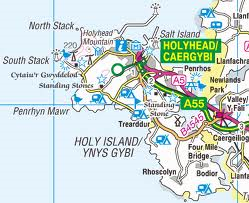
It is a month since I was inducted as Vicar of Holy Island and Team Leader of the Bro Cybi Ministry Area by the Bishop of Bangor. I am blogging quite regularly about the journey of our new Ministry Area, and this can be found here: http://bangor.churchinwales.org.uk/news/2014/02/bro-cybis-journey-1/

I am therefore leaving those particular reflections to that slot; what I thought was worth exploring, eversobriefly, is the way in which I have come to feel at home here in a relatively short place of time.

Having said that there is much about my previous parish that I miss, not least the people, and the Churches of Holy Island pray regularly that a new incumbent is appointed at St Michael and All Angels, Bartley Green as soon as is practicable.

I feel at home because Holy Island is quite like the place I grew up: Sheffield.

This is not as bizarre as it sounds. Sheffield, in God’s own county of Yorkshire is similar to North Wales not least because of the delight in straight talking, but also because both places are shaped by the landscape. Sheffield shaped as it is by seven hill still retains a semi-village feel, and a closeness to the beauty of the Peaks. Holyhead, Rhoscolyn and Trearddur Bay are shaped by the sea and wind in an altogether different way. In both places (the steel city and the land when the skies meet the sea) there is a need to listen attentively to the place as well as people.

In crossing the Straits, I am therefore learning a lot about being home, in this new place and in the place that I grew up; and both are continuing to shape me.

Posted in Uncategorized | Leave a comment

Welsh Musings 2

One of the good parts of being in a new place is being given the gift of space. Fortunately, for me the Church of England and the Church in Wales allow a gap between incumbencies. At the moment, I have a freedom to explore. Holyhead and Holy Island are places of great beauty. Nature often ravishes us with its beauty, and we are all too often blind to its advances. Thus, when we have the time to see, it is a gateway into a whole new world.

Bartley Green in Birmingham was also a place of beauty. There were walks by the reservoir (“the rezza”), through blue bell woods and the country park that could take the breath away. On the annual Rogationtide walk, I was reminded in certain places of the history that had taken place there, involving the English Civil War and the Restoration. Bartley’s beauty was enhanced by its people. People do something to a place. When a place is incarnated (to use a theological expression) something changes. Bartley is on the edge and people on the edge are usually those who have experienced life and not been defined by their circumstances.

Ynys Cybi is also on the edge, and as the gales have hit Trearddur Bay over the last couple of weeks it has sometimes seemed as if it is at the edge of the world. It is a place of beauty and resilience. Then again, holy places usually are.

Posted in Uncategorized | Leave a comment