Broken Lives, Healing Stories

This is a beginning, very tentative. Comments are very welcome. It will be turned into a bigger manuscript…..possibly book…. So over to you.

People have asked me where I got my love for reading, and in particular wrestling with the Scriptures from. Often the question is asked because of the working class background that I come from; indeed I remember at one interview a University Vice-Chancellor looking down through her spectacles, which were perched on the end of her nose, asked, ‘were you an unusual child, Dr Ellis?’

The Vice-Chancellor had made the assumption that working class children did not read, and here was I with a New Testament doctorate challenging her assumptions. Tim Chester makes the following point: ‘many working-class people love to read. There is a long history of self-improvement through literacy among working-class people, which finds expression in workers’ libraries and organizations like the Workers’ Education Association’.[1] Specifically within the UK, there has been, (or was), a long history of education being a means of escape from a life of relatively low-aspiration.

To answer the first question about a love for reading, you will have to come with me to Hillfoot School in Sheffield, to a reception class. A rather shy white-haired boy sat on the carpet with Joanne, Craig and Glynn and 15 others. Mrs Dahlek spoke softly, and asked what she had written on the blackboard. Only two of the class knew; I never knew that Kevin was spelt that way. I did not know it probably could be captured and put down like that I did not know that I could not read. I was after all 4. But that moment did give me a real desire to learn to decipher squiggles on a page; and my love for reading began to take shape.

The second about the love for the Bible is a little more complex. I was nurtured in the Christian faith at Parkwood Springs Primitive Chapel and then at St James and St Christopher’s Shiregreen. I am not sure at either place had a particular focus on the Bible; although having said that I do remember stories being told by Miss Lovell, and still remember the particular timbre in her voice as she told them. I also remember how deeply intertwined both Christian communities were in their local communities, from running Boys Brigades and Scout Troops, Walks of Witness (May Queen festivals combined with Pentecost) and Lunch Clubs, which provided food for the elderly and work experience for those with learning disabilities. Therefore if it is true that for most people the only Bible they encounter is the lived witness of a Christian community, then what these local expressions of faith taught was a story of inclusion, generosity, laughter and gritty determination. These sit cheek by jowl with petty power politics, child-like squabbles and a resolve to exclude people who did not quite fit. Churches in urban areas, like those in sub-urban, rural and inner city, are usually an accurate reflection of the communities that surround them. They are often people with broken lives attempting to live life differently. It is my experience that the overarching story of the Bible can provide some scaffolding to help people to do just that.

It was however at the age of 14, discovering that I was not allowed to go to a house group because I did not have ‘a proper adult faith’ that stimulated my curiosity and desire to know more about my faith. In retrospect the vicar who said I could not join in did me a favour; teenagers, then as now, are only too willing to prove people wrong.

It was through participation in youth groups at neighbouring churches, wrestling with the story of Jesus as told by Luke for A level, and two years with the London City Mission (LCM) that fuelled my desire to get to grips with the Christian Scriptures.

It was in the LCM base on Old Jamaica Road in Bermondsey that I encountered the idea of reading the Scriptures every day. It had, I think, never occurred to me before. There is a story of my arrival at LCM that is worth telling because it is, or was, illustrative of aspiration on a housing estate. I blew my ‘A’ levels the first time around. It was my fault; if you are up all might working for Mission Sheffield before you take them, then you will not usually be switched on for exams. The second time around was different: worked hard (extra timed essays, weekends spent in the research section of Sheffield City Library – this was a necessity, space was needed to learn) and was absolutely focused. In spite of this, I did not go straight to university. I did not think I was bright enough. The school was not particularly switched on, not even a handful of pupils went on to university. Hammond describes a ‘wall in the head’ for people living on estates. That was true for me; so I did not apply.

It began to be broken by the leaders of the Voluntary Evangelism Scheme. I went for two weeks, and stayed for over two years. they took a chance with a shy and insecure 19 year old, and my journeying with the Bible was about to take a dramatic turn.


[1] Tim Chester, Unreached, Leicester: IVP, 2012, p 140.

Posted in Uncategorized | Tagged , , | Leave a comment

Divine Whispers

I am not sure I have ever even felt that I have heard God speak in an audible way before.

However, before you reach for the white coats. On Wednesday last I was at St Ninian’s Cave, near Whithorn in Scotland.

DSC_0604

Ninian was, perhaps still is, one of our finest Celtic saints.

The coast line is desolate

The shore is not the easiest to walk on

The wind just in front of the cave conjurs a profound sense of stillness

After a moment in the cave, I turned to go. Having the pup with me was my excuse, but at the moment I am sure I heard an audible whisper: ‘you work hard at finding me, yet when you are in my presence, you do not stay long enough to talk’

I am still thinking this one through

Posted in Faith, Personal | Tagged , , | 1 Comment

Syrian Hopes

I have just returned from Dumfries and Galloway, and missed the debate in Parliament yesterday. I am not sure I have formed an opinion over what happened. Those of you, who know a little of my politics will not be surprised that I did manage a flicker of a smile over the discomfort caused to the Rt. Hon. David Cameron.

However, I have been to Syria. I went, with my wife, and a group of Anglican and Orthodox pilgrims in 2007. (Time flies does it not). We were guests of Orthodox bishops and their communities. In common with other Christian minority groups in the wider Middle Eastern region, our hosts spoke very positively about their experiences of the hospitality offered by their government, and the protection offered to them. President Assad was in power then as well as now. We chatted at length about their fears that at less tolerant Islamic regime would mean the end of the Christianity in the holy lands. This does not seem too much like hyperbole now. I do not know enough to comment about whether the ancient Christian communities in Syria were too close to Assad or turned aside at atrocities his regime committed. I am concerned at what might be for the Christian communities in Syria if their president is overthrown by the rebels aided by the west. This is not to say that I am pro-Assad at all. Western Intervention in the Middle East has led to the exodus of Christians from the area. The world would be a poorer place in there was to be no Christian presence in Damascus on a street called Straight.

This is not of course to say that the suffering of ancient Christian communities is a reason for western concern or action. Indeed such intervention can add to the persecutions faced by such groups. It should make those of us who are Christian think though.

I trained for ordination from 1999-2001 at Queen’s in Birmingham. One of the most significant lectures I heard was by Tissa Balasuriya, a Sri Lankan theologian, who sadly died earlier this year. In that lecture, he reminded us that when as Christians we receive communion, we do so in company with the world wide church. That means receiving alongside me is someone from Asia, Africa, Latin America. There would be a big gap therefore if alongside Americans, Brazilians, Cambodians, Spaniards, there were no Christians from Syria.

My hope is for peace and for the flourishing of this ancient Christian community, which is one of God’s gifts for the world.

Posted in Personal, world | Leave a comment

Hope is not a dangerous thing

“Let me tell you something my friend. Hope is a dangerous thing. Hope can drive a man insane.” Red to Andy in the classic (I think) film The Shawshank Redemption. The clip can be seen here: http://www.youtube.com/watch?v=XDGNsbLayJw

Since my sabbatical began, and indeed before, I have begun to discover that hope is not actually dangerous; indeed it is foundational to most things that we, as humans, consider good. Hope, for me as a Christian, is that which God has planted into our hearts, that cries out: ‘life is remarkable’, ‘things can change’ and ‘there is purpose and meaning’.

Hope is found in the stories of men, women and children.

Hope is found in the lives of some who have been forced to flee their own countries, for political, religious, and yes, economic reasons. Hope that a new context will reshape the contours of life. It is interesting that one of the greatest gifts to the Church in England has been the number of Asian, African and Latin American Christians who have settled in the UK and brought fresh life to communities. Their hope is fashioned on the altar of experience, as they connect their stories with the sacred narratives of the Bible. They do not do so in a way that rubbishes the problems and complexities of the text, but in a way that improvises with the divine impulse found in the large narrative. For individiduals that I have discovered in Manchester and London, they follow in the footsteps of Abram and Sarai.

Hope is found in semi-detached house on a housing estate, where a woman and her daughter have lived for 40+ years. Despite changes in attitudes, of neighbours, and chances offered to those who live in that patch of urban Sheffield, hope is still there, as mother inhabits the story of grace and grit she finds in the Christian story, shaped as it has been by the liturgy of the Eucharist. For daughter too, there is hope as she inhabits the story of Peter, battered and bruised on Holy Saturday, beginning to hear bewildering stories from her brother that something life-changing can still happen.

Hope is found in the vicarage in a seemingly desolate town. Where a clergy family, acting on the impulses of their faith, pour out their lives for people, believing that the Christian hope can change the world. This is not done in a ‘colonial’ manner, bringing middle class values to a place where they jar and become worthless. Rather it by connecting with the divine story they have couple and their children are beginning to discover that a bias to the poor is more than lip service to a theory, but a costly opening of homes to those with much to teach.

Hope is not a dangerous thing. It is essential and life-transforming.

It is an anchor. For without hope, people can be driven insane, to turn Red’s quote to Andy on its head.

Posted in films, Personal, Sabbatical, Sabbatical - Bible | Leave a comment

worship, discipleship and summer camps

My son had a brilliant time at the Scripture Union Camp he attended last week. I think he had a fabulous week at New Wine in Newark the week before when we camped together. Both events had teams of committed and amazing Christians giving their time to nurture and disciple young Christians through activities, games, bible study and worship. Many evangelical and catholic Christian festivals do amazing children’s and youth work, and their volunteers and staff should be saluted for it. I have noticed that each year we have returned from New Wine, his faith has been honed a little bit more, and I am so thankful for that.

Weeks away do enable children and adults to grow. I reckon that the growth occurs usually because work is done in the home and the church all year around. Families are the basic unit for Christian discipleship. Therefore each year, I attend New Wine, I am reminded afresh of my duty to introduce my son to my faith, to so demonstrate it that he will be attracted through my life to the one alone holds the keys to the universe, Jesus the Christ.

Thank you Scripture Union

Thank you New Wine

Posted in Personal | 1 Comment

Sabbatical Musings 9: Stories that shape us

In the past couple of days, I have watched two films. A Song for Marion and Grow Your Own. They were both moving. I think they were well acted. One is about coming to terms with loss, and the other might be about identity and discovering who you are. I am not a film critic, so you will inevitably have different views of what you like and do not like.

I was recommended both films after conversations concerning the socio-economic period that the UK currently finds itself in. I made the comment that the recession of the late 1970s/1980s, there was satire and comedy that provided a light along the way. Spitting Image was a particular favourite of mine. The Thatcher Cabinet were turned into boggarts (h/t the Harry Potter series) by the programme and made to look ridiculous. An example can be found here: http://www.youtube.com/watch?v=jINZBOxdja8. To Spitting Image, there was Auf Wiedersehn, Pet; Boys from the Black Stuff and later films like The Full Monty and Brassed Off. Cathy, Come Home and Kes were earlier examples of films that made social comment. Where I wondered (in the conversations) were films that spoke about today’s austerity. There are some; and indeed Radio is sometimes likely to make social comment more immediately than other media. The Radio 4 6:30pm slot is a good example, from Rory Bremner to The Now Show. I suppose social network sites like Twitter have also a part to play.

Into all this, comes my own particular ‘hobby horse’ at present; how do we tell afresh the stories of the Bible. The Bible is used in churches and faith communities in many and various ways.

In a number of conversations; I have been asked; why do I want people to read the Bible? This is a legitimate question.

First, it contains the story for Christians. It is a chronicle of the beginnings of our faith. I would admit it is not the whole story, but perhaps the most pertinent parts.

Second, if, as Christians, we want to tell our story to the world around us, we need to engage with our text. This is why I am keen on developing our connections with the drama of the Bible from Genesis to Revelation, and to see ourselves as part of the story.

Third, for me the story of the Bible has been tremendously liberative. Study of the scriptures without doubt changed my life. This is in part because theology was my chosen route into Higher Education. I would have to say – and this is a political comment – I would not have gone had participation in university led to personal debt. Education for me is a basic human right. In part though, study of the scriptures has been life-changing because it makes sense of the world in which we live.

Fourth – and finally – it is the life affirming and meaning making narrative against which all lives can blossom.

Introducing Scripture is therefore an evangelistic imperative: for no one can truly read the texts withough having to answer a number of questions, the chief of which is: how do I follow Jesus as Lord today.

Having said that I leave myself open to the charge of a bible within a bible: the Jesus story being the most important. It is a golden thread, but it is only so because it fits within the wider story of God working within his world.

Posted in Sabbatical, Sabbatical - Bible, Sabbatical - Personal, Uncategorized | Leave a comment

Sabbatical Musings 8: Chaos in the midst of sanitised order

I have always had a thing about chaos. I am not a good person to be with if you want life compartmentalised or indeed if you need things tidy. I do not necessarily think that this is a problem. Some people are ordered; and others are not. I happen to fall into the category of those who are not. I well remember going into an OT professor’s study, and seeing him just above a pile of books. The professor knew where everything was, and people just left him to it. Sadly, I am not as prolific an author as him: one day, perhaps…

In July, I spoke at two conferences; one of them at the Urban Theology Unit was gloriously chaotic: speakers shifted around (I was one of the speakers whose session was moved), venue not quite ready. The other was the British and Irish Association of Practical Theologians, which was superbly organised. For no apparent reason, I found the UTU slightly chaotic conference more helpful. For me, fluidity can help wondering to happen.

This is because for me: the slightly chaotic allows creativity to thrive. I hasten to add that this is true for me, and others blossom with order. I will always have several books on the go; which all end up read – eventually. I have picture of what my allotment will look like – and it is getting there.

Theologically, order has more going for it, I suppose. The opening chapter of Genesis seems to be about the creator imposing order on chaos. In the Gospels, Jesus’ miracles are often seen as a triumph of order over chaos. I think this can be evidenced in the nature miracles (walking on the water, stilling the storm et al).

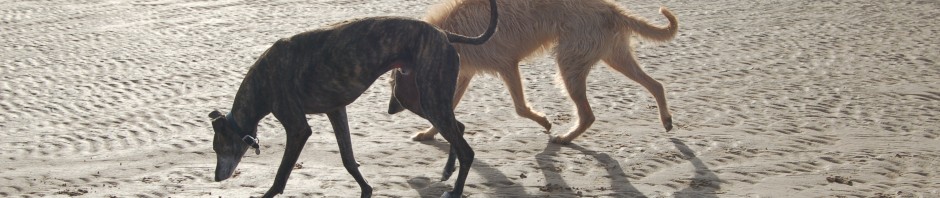
As always that is one side of the story: inherent in the Christian tradition is a God who is playful and creative. I do think play and creativity can be ordered and boundaried; however it is not always the case. Just as my lurchers run for sheer pleasure, God is creative because he delights to be. God does not need to play, just chooses to be so.

This is not really a justification for disorganisation, but is a pointer to allowing disorder at times. I have some chinese vegetables growing in my allotment. They have been surrounded by weeds and other plants for the last couple of months. They vegetables are not almost ready to eat. Sometimes chaos creates the right environment, just as much, perhaps, as order. Be creative and chaoatic. It is not going to hurt, for once 🙂

Posted in Personal, Sabbatical, Sabbatical - Personal | Leave a comment

Sabbatical Musings 7: Orienteering around the Bible

I referred recently to the fact that the Bible should not be seen as some sort of divine satnav, but rather as a means of orientating one’s life. This is a big claim for a multitude of reasons.

Many Christians do use the Bible as some sort of satnav. The problem is that the Bible, like many older satnavs, is not designed to respond to some of the specific choices we have to make as Christians living in the 21st Century. Let me explain. My slightly older satnav was helping me navigate from Newark to Nottingham. It wanted me to turn right off the main road. Unfortunately for me and it, the right hand turn had been taken away during upgrading to the main road. As a result, the satnav encouraged me to go round and round in circles until I uttered some unvicarly words, and turned it off. I actually got there in the end by using an old-fashioned map.

Maps do not work on the same principle as satnavs. It is true that when I use my old map on Exmoor in October, there have been certain additions, but the contours, the overall shape will not changed and I am still able to follow the map with relative ease. It helps that I have learnt to read maps and can now with little effor find where I am on the map from the terrain in front of me. However, I know from experience that margins for error are quite small.

You can for example be a degree out when using a compass at the beginning of the journey, and walk within visible distance of your intended journey at the outset, but within, say, 5 miles, you will be at a completely different point.

Similarly, with the scriptures, we do need to know them in order to orientate our life from them. If we do not have sufficient knowledge, we will, I think, have to use them like a satnav or as some sort of divine slotmachine. The problem when we do that is that the scriptures can become unsatisfactory. They do not appear to answer the questions posed and its supposed dictates rankle against modern life.

You see the Bible is not meant to be used in isolation, but in and out of a relationship with a loving God. It is that relationship that helps orientate us to understand what is revealed of the divine-self in our holy texts.

This is indeed a subject to which I will return.

Posted in Sabbatical, Sabbatical - Bible | Tagged , , | Leave a comment

allotment days

I am about to go to the allotment.

I know this is not earth shattering news. It is damp in Brum, and there are no doubts that I will interrupt a slug fest

There is little doubt that food tastes better when you have grown it yourself. At least, I believe that to be true. Others might beg to differ. It is interesting the variety of shapes that vegetables come in. They are not always as neat as presented in supermarkets. Allotment people do not reject misshapen carrots or spuds. There could be a lesson for life there.

On an allotment people muck in together. We borrow and lend. We share. We learn how to work with nature rather than against it.

In my 18 months as an allotment plotholder, I have learnt that nature can change the rules. It does so because it can. Nature makes the rules, and no amount of bellyaching from me can change that.

Allotment days for me are happy days.

Posted in Allotment, Personal | Tagged , | Leave a comment

Sabbatical Musings 6: Where do we find beauty?

I am an urbanite. I have lived in the following places: Sheffield, London (Bermondsey, then Earlsfield), Newcastle, Gateshead, Manchester, London (North Kensington, Pinner, Shepherd’s Bush), Cheltenham, Birmingham, Gloucester, Maryport and Birmingham. Apart from Maryport, which was still urban, all have been urban spralls; and usually estates.

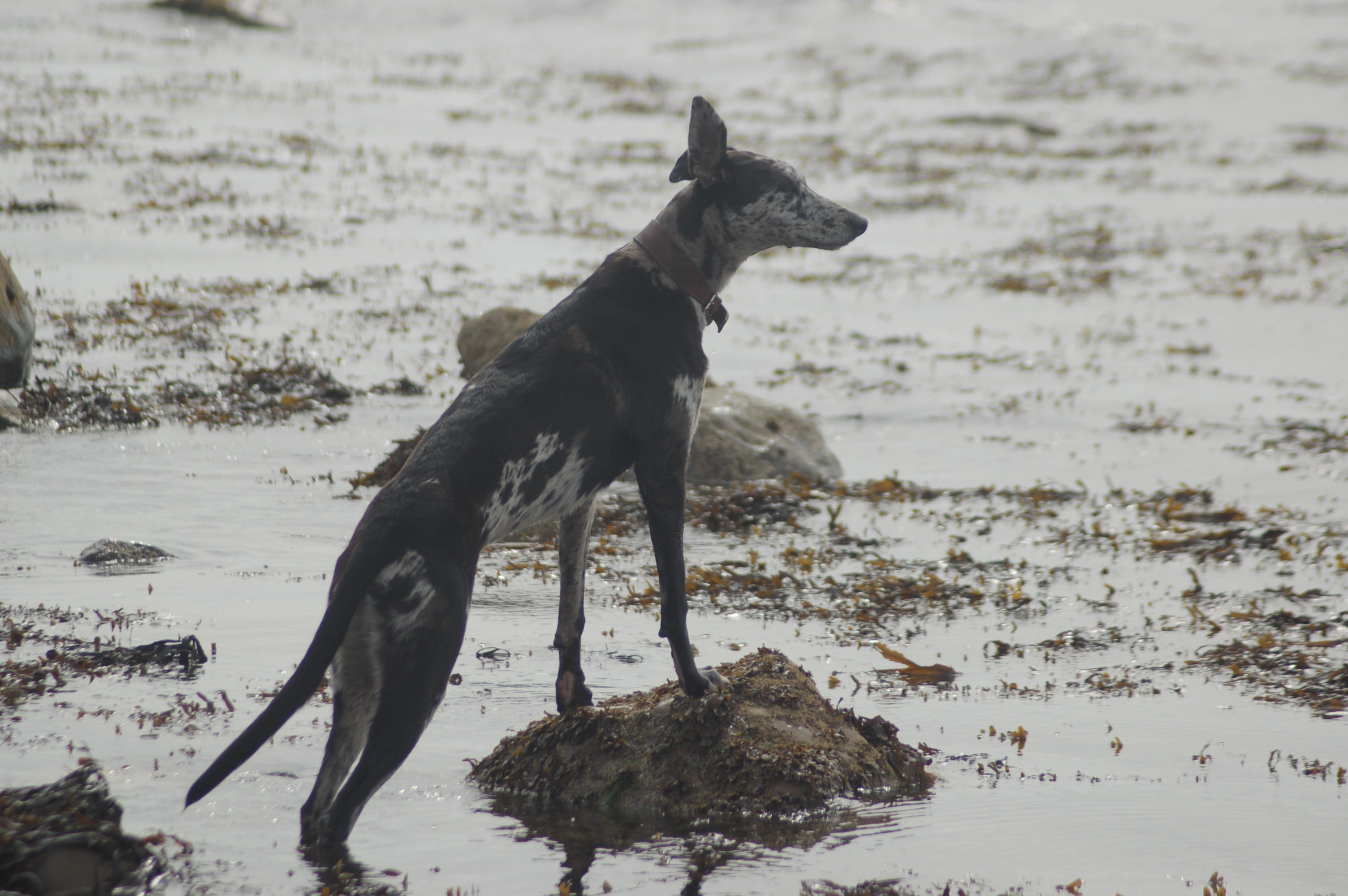
I have been walking with Samwise today through the Malverns. It was stunningly beautiful. During this just over a month of sabbatical I have learnt to appreciate beauty much more. This is partly because I have taken time to stop.

I have appreciated the stunning sunsets over Bartley Green, especially over the allotment. I have taken it the beauty of the Solway and the North Devon Coastal Path; even the beauty of the camp fire smells at New Wine.

I need to work harder at seeing beauty in the urban. Perhaps we have a propensity to see beauty when we are on holiday, or living life at a slower pace.

I need to commit myself to photographing urban beauty or beauty in the urban. When I have done so, I will blog some more.

Posted in Sabbatical, Sabbatical - Personal | Tagged , , , | 1 Comment