Reflections of hopefulness

In the past two weeks, I have sort of been part of two Flower Festivals and an Arts and Crafts weekend.

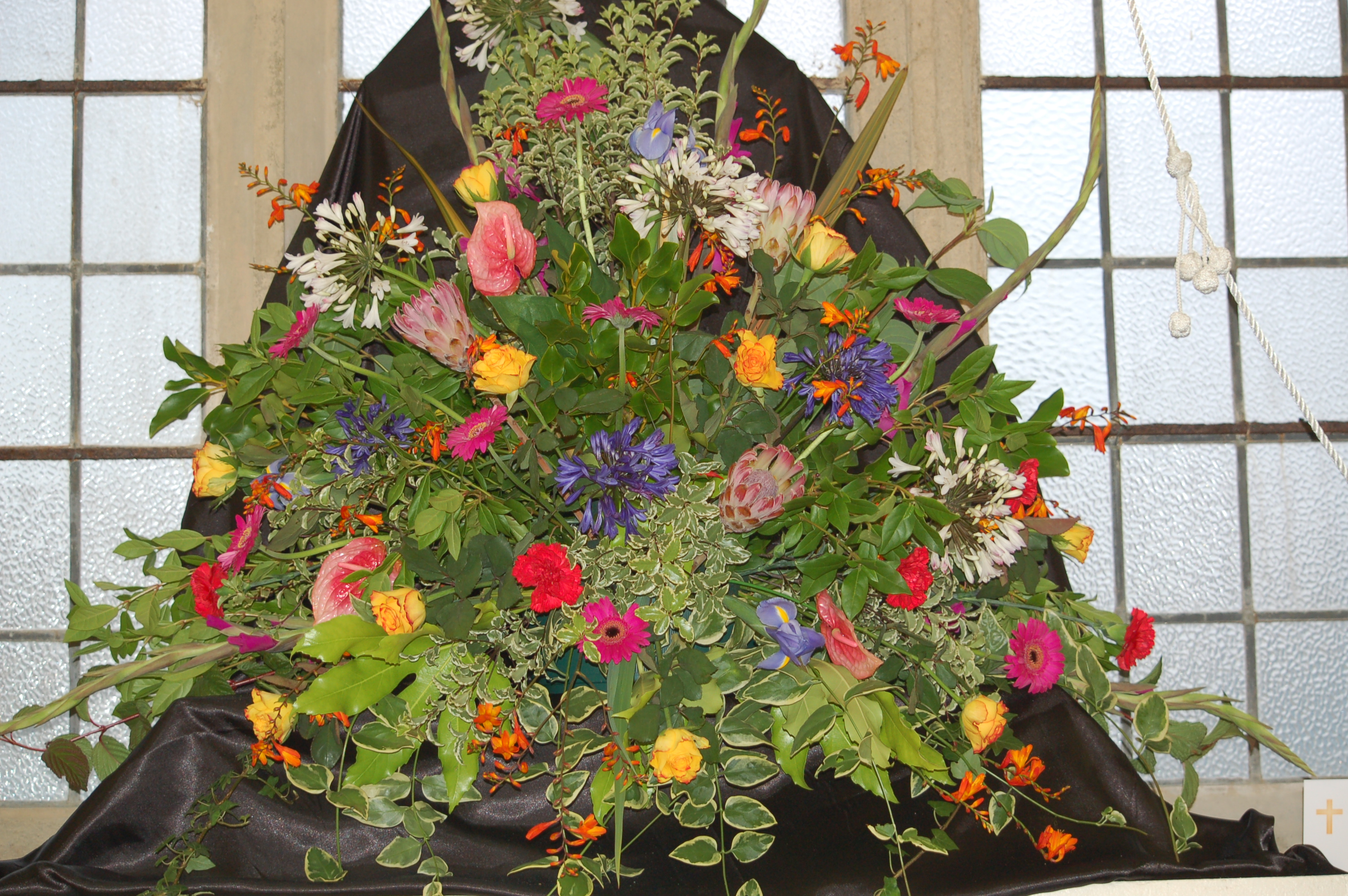
St Ffraid’s, Trearddur Bay and St Cybi’s, Holyhead have both had Flower Festivals. Both involved creativity and team work, both in preparing exhibits and indeed in stewarding the events.

Lesley Corrie's masterpiece at St Ffraid's

Lesley Corrie’s masterpiece at St Ffraid’s

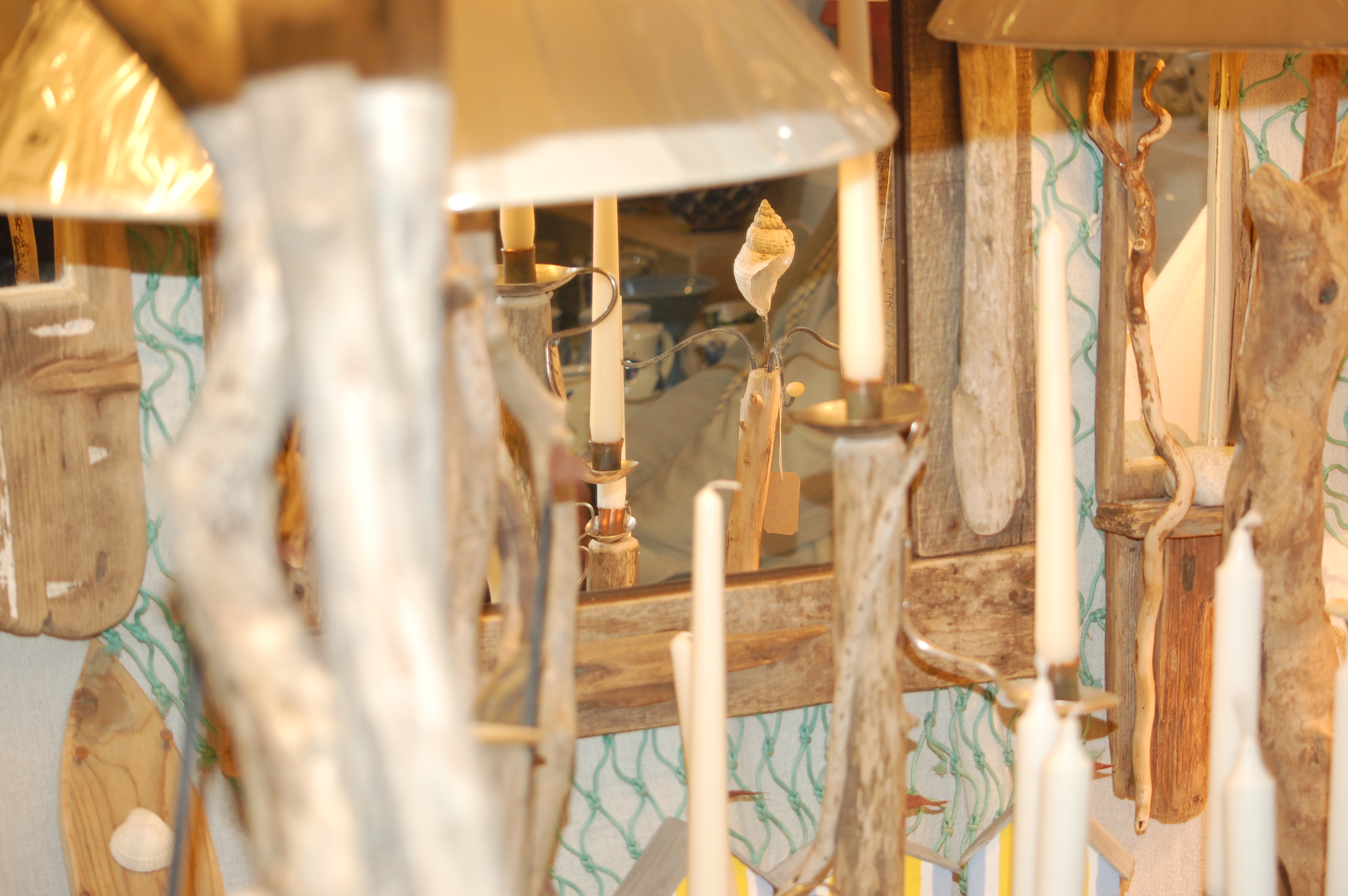
St Gwenfaen’s, Rhoscolyn has just finished an amazing arts and crafts weekend, featuring artists (sculptors, painters, potters et al) from across Anglesey and beyond. I have found myself being transfixed by lots of pieces, and as importantly by the reflections I could see in the mirrors

Candles and mirrors from Driftwood

Candles and mirrors from Driftwood

Reflections show many things. As I have seen people work together, I have seen God at work. and feel hapus iawn.

Posted in Uncategorized | Leave a comment

Bi-lingual matters: more than just language

Dw i’n dysgu Cymraeg. Mi wnes i symud ym Mae Trearddur yn mis Chwefror 2014. Like most people learning something new, I have become quite passionate, in an understated English sort of way, about learning and speaking Welsh. It is not always easy, which language is; and besides, at my ripe old age, I have already lost a good number of brain cells :-). It is not really a cause for congratulation, had I moved to Paris, French would be an expectation and the willingness to continue to learn would be taken as read.

I have endeavoured to use Welsh in worship. It seems to me to be the most natural disposition in a country where there are two official languages to do so. There are interesting reactions at times to my doing so. For the most part, English people whose Welsh is patchy have no problems. They accept that they are in Wales. Those born in Wales respond in a variety of ways, not all of which, at the beginning, were to do with my pronunciation.

It would be a mistake to think though of bi-lingualism as purely a matter of language. It is also a way of interpreting the world. Most of our liturgy within the Church in Wales, for example, assumes one way of looking at the world, even if within the congregation there might be several ways of understanding life.

Indeed understanding that the world is not monochrome might be harder that getting my English eyes to read with Welsh spectacles.

Posted in Uncategorized | 1 Comment

Stretching the canons

It must be the biblical critic in me. I am a bit of a radical conservative when it comes to the text. I am not just talking about the biblical canon, indeed, I am the only person in the universe who struggles with Sherlock as portrayed by Cumberbatch, I would far prefer Brett, although I could go along with Mr Holmes played by Sir Ian. I don’t like the liberties taken with Conan Doyle’s script. That said, Martin Freeman’s Watson is closer to the text than the bumbling baffoon that is normally portrayed alongside the Baker Street sleuth. I also struggle with Endeavour for similar reasons. It could be that I am soft, I just don’t like someone else disturbing my imaginings. Of course, I have a choice, I can decide not to watch.

I struggle when the biblical text is claimed by one group or another to pronounce a particular point rather than join in with the story. I suppose that is why I can never be a true conservative (in the theological and very definitely in the political sense). The story itself invites us to join in with it. As I looked at Flimby yesterday at the old mining village by the Solway sea, (This is St Nicholas Church, at the heart of the community, even if physically at the edge: you can see the people, I know: they are the church)

DSC_0833

I could hear again the whispers of the saints of old as they strained to hear a Palestinian voice from a long time ago.

It is communities together that enable the text to dance, and indeed doing so dramatically change the story in a way that no one scholar could.

Posted in Uncategorized | Leave a comment

Friends: the beauty of them

I have been back to Cumbria recently. I was successively Team Vicar and Team Rector there for a while. There were good times and not so good times. To be honest, when I was good, I was very very good, and when I was not…. I was unbearable. I learnt a lot about mainly myself.

Cumbria beauty

Cumbria beauty

What was brilliant about being there was allowing the present to engage with the memories of the past.

The distance between 2009 and now brings a sense of perspective, but friends can help you remember that it was not always as bad as you think, and are a healthy reminder that no matter how difficult something sometimes seems to have been there is usually positive impact.

I am not a person who makes friends easily. I can do acquaintances well, if there is a mutual acceptance that I will try my best to do small talk and that I will usually fail or get distracted in the process.

I have often thought that a good definition of a friend is someone you would die in the trenches for.

I spent time on my visit with two of them. You can go for weeks, months, perhaps years with very little contact… and then you meet up and it is as if you have never parted.. and you are far too gracious to realise that both of you have aged in the time you have been apart.

Friends give life. I need to make more time in the coming months and years to give and receive such life.

Posted in Uncategorized | 2 Comments

The Oppressor in the Mirror

These are the notes which I loosely used in my paper at the recent BIAPT Conference. I am submitting a short piece arising out of it to Practical Theology

Croeso i Gweithdy. Welcome to the Workshop

Mae hyn yn fy stori. Dw i’n symud i Bae Treaddur o Birmingham yn mis Chwefror 2014.

This workshop reflects on my move from England to Wales. It is therefore personal – all theological engagement is.

It is an engagement with a continuing journey. Ostensibly, it is about moving from one part of the British Isles to another (I always accepted Britain was bigger than England; coming from the North helps perhaps), but also from one nation to another (I probably did not understand the concept of Wales as a separate nation).

Much more than that it is a narrative that is beginning to unravel what it might be to be Welsh (this by a man who had rarely set foot in Wales, and been to Holyhead once before en route to Ireland) and within that what it might mean to be English (would I use that term to describe myself, I have always defined myself by my regional Yorkshire identity)

It is about doing theology and discovering that what I had presumed had been a shared history is far from that; and perhaps it is not too presumptuous to assume that the much heralded characteristic of English fair play does not appear to have been in evidence with how the English or British establishment had dealt with the people of Wales. It is a theology that begins to feel what it might be like to be the oppressor in the narrative. For someone who tends towards being inclusive in many of the current ecclesiastical and societal debates, it has been at times galling to reflect on the not always positive impact of England upon Wales. There are four contours that have become important in my journey: language, history, Landaff rather than Canterbury, and devolution.

When you are new to a context, you meet lots of people, and also go out of your way to introduce yourself. On one such occasion, I sat with the Head of the local secondary school for the first time. About 20 minutes in, I was struck deeply and profoundly by his words.

‘My Dad was caned at school for speaking Welsh and made to wear the knot. Whenever I meet someone who is from England, I remember that and our history’

I had no idea of that the Westminster government had tried to make English the first language of Wales. I knew nothing about pupils being punished for simply speaking their mother tongue. I knew nothing of what the Headteacher termed ‘our history’

I knew nothing of the so-called Blue Book or Brad y Llyfrau Gleision which the 1847 Government report into State of Education in Wales has become known.

Two quotes illustrate its conclusions

Teach English and bigotry will be banished

The Welsh language is a vast drawback to the Welsh and a manifold barrier to the moral progress and commercial prosperity of the people. It is not easy to overestimate its evil effect`

Some of the attempts to make English normative were dressed as enabling different choices to be made. In order to improve pupils’ knowledge of the English language, the Welsh education system of the late 19th century employed the ‘Welsh Not’ or ‘Welsh stick’ as a method of discouraging children from speaking Welsh. This small piece of wood was given in turn to individuals overheard talking Welsh, and whoever was wearing it by the end of the week was often severely punished.

Whilst such practices officially fell away in the early 20th Century, in parts of Anglesey they continued. Several of my congregation from their late 40s to late 70s recall wistfully Welsh being sidelined in order to enable them to get on.

Coupled with the official and unofficial repression of the language, there has been a continual suspicion and perhaps mockery from across the border.

If an Englishman enters a shop in Welsh-speaking parts of Wales, the locals are likely to switch promptly to speaking Welsh. Thus the Englishman cannot be sure whether they are talking about him

This comment was made in 1994 by the then Secretary of State for Wales, John Redwood. In addition, one might reflect on game shows and comedy routines that seem to poke fun at Cymraeg that are acceptable, when perhaps if it was directed at another language, it might be construed as racist.

Ond, Dw i’n dysgu Cymraeg achos i ddangos parch at ddiwylliant Cymru.

Another conversation between a Welsh colleague and me was equally poignant

‘We are a conquered people. Your Castles are still here. We remember, even if you do not’

My immediate response was not did I remember, but how little I knew. Did I know anything about the wars between England and Wales? I knew nothing of the viciousness of Edward I.

Indeed I can recall being given by first tour of Ynys Mon, and the village that is called Niwbwrch or Newborough.  The “new borough” was created when the English king, Edward I, removed local people from Llanfaes in the South East of Anglesey so his builders could get on with the construction of Beaumaris Castle which guards the eastern end of the Menai Strait (Afon Menai) and at the time served to control Gwynedd.

I had no idea of the imposition of English law on Wales. The Act of Union between England and Wales set aside a legal code more ancient that that of Westminster. The Union between the two nations was one between conquered and conqueror in a way that the Union between England and another Celtic nation, Scotland, was not. It is perhaps the keeping of a distinct legal code as well as it different education system that makes Scotland more confident that the stateless nation of Wales.

Another strand to this narrative is the move from one Anglican Province to another, from the Church of England to the Eglwys Yng Nghymru. Like the majority of Anglican provinces, the Church in Wales is not established. Moreover, it is a popular maxim that church of the Werin Gymreig (Welsh Folk) was very much a nonconformist church, forged by a history of being Christian dissenters. This is only partially true. No doubt the Church of England in Wales did at times represent an English Chaplaincy abroad, and its Oxbridge educated bishops and clergy appeared to be aloof from the working communities of Wales; and, yet the suggestion that the working folk chose the Capel rather than the Eglwys as their spiritual home needs to be carefully and patiently re-evaluated. Notwithstanding this, it does appear to be true that the Chapel was Welsh speaking and by and large Church, English.

The Disestablishment and disendowment of the Welsh Church through the Welsh Churches Act in 1914, coming into effect in 1920 was the result of a very lengthy campaign by nonconformist church leaders and politicians alike, with Gladstone reputed to have declared that his aim was to rid Wales of the foreign Church. Neither Church nor Chapel leaders covered themselves in glory during the campaign that led to disestablishment. Church leaders seeming to want to make a connection between themselves and the ancient Celtic Church, and at the same time noncomformists seemingly wishing to disembowel as well as disestablish and disendow the Church of England in Wales. Much energy on both sides was put into this debate, when just a decade after 1904 Christianity in Wales was beginning to decline.

There is one other contour that is important for setting the context in which theology is done. In 1999, a measure of devolution came to the Wales by the slimmest of margins. In the referendum held on that day Wales voted by Yes 50.3% / No 49.7%) in favour of a degree of self government, realised in the Welsh National Assembly. There does appear to be a measure of increasing self-confidence in the nation. Whether the bitter cuts of austerity which are destined to hit Wales will strangle this fragile confidence remains to be seen. Wales is defining itself.

Where Wales might once have found its identity in Christian belief, this is no longer the case. Wales like the other nations of the British Isles is increasingly secular, and the stories of Celtic saints that shaped the nation or of the 18th and 19th Century non-conformity, and even of the Roberts revival hold comparatively little sway. Non-conformist divines may have seen similarities between Israel and Wales in terms, yet such concepts would be alien to most families living and working within Wales.

Politicians of all hues cite inclusiveness as one of the features of the modern Wales. This begs the question how can you hold together those who are first language Welsh, English incomers, and Welsh people who will only use English to the name but a few groups.

Wales has much in common with its Celtic sibling, Scotland, and yet politically there are significant differences. Plaid Cymru is not yet the Party of Wales in the broadest sense. Labour or Llafur still holds a dominant sway, and the rise of UKIP cannot solely be put down to the English incomers. In my town of Holyhead, where poverty is as deep and marked as some parts of Liverpool and Manchester, voters tune in all too easily to its message.

How then does one do theology within these contours: lines on a constantly changing map? Indeed part of doing theology within the Church in Wales, is simply introducing regular worshippers to the changes that have taken place.

One of the first steps to take when doing theology in Wales is to note not only the bi-lingual nature of the nation, but also the cultural context is so very different to that of its next door neighbour’s.

I have to accept that my Englishness can be a barrier, not being English itself, but how the English State has effortlessly acted in a colonising manner to Wales, sometimes with benevolence, but often not.

Theology within such a context is, for me, tentative and always provisional. It helps that I am learning Welsh.

Bi-lingualism though within the context of capel and Eglwys is not primarily to do with which language is used, rather it is about understanding, and perhaps recalibrating the place of faith communities within Wales. The halcyon days of revival, renewal and centrality have disappeared, and Christian faith communities encompassed more than established church and conformists. Other faith groups flourish. Densil Morgan notes that ‘Evangelism divorced from radical and wholehearted social responsibility will fail, and deserve to fail’. Dare I add that evangelism for the purposes of recruitment and retention of either church or chapel should also deserve to fail? This though is a concern both within the Church in Wales and traditional nonconformist chapels; the depth of our decline means there is a temptation just to put the proverbial bottoms of not very comfortable seating arrangements.

The commitment to the common good should see local church congregations and faith groups at the forefront of finding answers to the question what does it mean to be Welsh in a 21st century context. An English incomer might raise his eyebrows at the notion that was seemingly widespread of Wales or the Welsh as a religious nation or holy remnant. If this was truly the case, it has gone now.

Wales and Welshness has been defined by its relationship with its neighbour. This English priest is committed to enabling in some small way Wales to step out of its neighbour’s shadow. True it sometimes does, particularly when playing sport against England. But this stepping out needs to become more routine. I would argue that a greater appreciation of the history of the two nations from both sides would help. The continued renewal of Welsh will underpin such self-confidence, but must be done in a way that does not exclude. I might suggest that this redefinition will need, perhaps even demand a greater degree of devolved government, and in time, independence as Wales shares its passions, history, culture and indeed faith in the family of nations.

Posted in Uncategorized | Leave a comment

The Oppressor in the Mirror

The Oppressor in the Mirror: One English priest doing theology in Wales

This is my abstract for BIAPT 15. As I begin working on it. What do people think?

This workshop reflects on my move from England to Wales. It is therefore personal – what theology is not? It asks questions about the stories that define individuals and communities, and explores notions of belonging and otherness.

When you are new to a context, you meet lots of people, and also go out of your way to introduce yourself. On one such occasion, I sat with the Head of the local secondary school for the first time. About 20 minutes in, I was struck deeply and profoundly by his words.

‘My Dad was caned at school for speaking Welsh and made to wear the knot. Whenever I meet someone who is from England, I remember that and our history’

I had no idea of that the Westminster government had tried to make English the first language of Wales. I knew nothing about pupils being punished for simply speaking their mother tongue. I knew nothing of what the Headteacher termed ‘our history’

Another conversation between a Welsh colleague and me was equally poignant

‘We are a conquered people. Your Castles are still here. We remember, even if you do not’

At that moment, I understood that I was in a foreign land, looking back at me from the mirror was the Oppressor. I discovered that I was Other. How was I to do theology in a meaningful way?

This workshop will touch upon

– identity
– story
– otherness

It does so tentatively; it could not be otherwise. I am an English priest serving within the Church in Wales, which still for many is still seen as the English Church (The Church of England in Wales).

It will chart some of my own discoveries of Englishness (there was something odd about being an Englishman in Wales whilst the Scottish independence referendum debate flourished), as I have begun to learn the Welsh language and sought to embrace some of the cultures of Wales. In doing so, how my desire to learn has been challenged by those within and outside of the Church, by English and Welsh.

The workshop will look to what the Christian narratives might offer to discussions about identity, story and otherness.

Posted in BIAPT, Wales | Tagged , , , , | 1 Comment

Softly stated: election thoughts

Maybe I am wrong. I admit it. Maybe, just maybe, my support of the Labour Party is misguided. Maybe those who have led the Labour movement fail to understand British society. Maybe the Labour Party will have to decide what it stands for. That is for them. I used to be a member, but I am not now, although I think the movement that gave us Atlee, Bevan and Smith still has something to offer.

I have a hunch though that passion of social justice is both thoroughly human and resonant with the gospel that I believe in. That does not mean that there is not a disconnect between Labour and those who I might believe would want to vote for them.

I am sure though generosity and hospitality to those in need are values are cherished by many.

I am certain that people want not just a safety net for those who are poor, but a place where those who are vulnerable are allowed to flourish. This does not mean that those who are wealthy are not cherished but understand that if another is diminished so too are they. I happen to believe this comes from a Christian worldview, but it also secular, Jewish, atheistic, Islamic etc etc etc.

I am convinced that whilst most of us secretly might want an extra few pounds in our pocket, we want not want cuts to cause more to go to food banks or those living with disabilities to despair at going to a medical. That is not the community that many would want to belong to.

Maybe the UK has to look long and hard at the question of immigration. But I am sure that most of us would embrace those fleeing death, and if we will not, perhaps we have to take a long look at ourselves.

Lots of maybes. Lots of concern. Lots of prayers.

and I guess hope that together people of all shades might want to converse and work together to build something better, not Labour, Tory, Green, Plaid or SNP shaped… but a place that I might say reflects who God wants us to be

Posted in Uncategorized | Leave a comment

The great feast: it continues

DSC_0364

Lent continues. Today I have focused on memories of those who have travelled with me previously. On my study wall is a cross. I am a Vicar. It goes with the territory. This one was fashioned by a carpenter named John. It is deliberately made to look battered. John died recently. I miss him.

As I look around my study, I see a photo of me and my Dad larking around. He died 20 years ago. I miss him.

I can also see photographs of my ordination group. I am unsure how many of them on the photo know where I am or whether I know where they are. I wonder whether they are still as passionate as we were in 2001. I do miss them.

There are also bits and pieces from ministry eleswhere: a two pint glass from St Michael’s CE School, Bartley Green; a dragon painted by my son, Shaun, when he was 7. It is a welsh one: perhaps it was prophetic. There are icons from Patmos, Chalices from Lee Abbey and paintings from Gloucesteshire.

There are things that need to be thrown away really too. But, to do that might lose the memory.

Lent is a journey, as if life. We do not journey alone. Even in the solitude we are surrounded by companions. Those companions and events shape me: even the ones I might struggle with.

Someone, somewhere might remember my part in their journeying. Sometimes it will be for good, and sometimes not.

Together we still journey

Posted in Faith, Lent 2015, Personal | Leave a comment

The great feast: twenty seventh day

H is for Hawk

I have been reading H is for Hawk. If I am honest when I set out on my Lenten journey, I should have finished it by Day 5, but here I am at the end of Mothering Sunday, still not quite finished. I am savouring it.

What is it about? You will have to read it. It is ostensibly about the relationship between a Hawk and its Human. It is about bereavement. It might possibly be one of the best books on grief since the timeless A Grief Observed. It is about becoming human. Or the discovery of what it means to be human.

Today, the Human discovers that the Hawk plays. It does. As I read it, I began to chew on another delicious idea. God plays; and invites us to do so too.

Posted in Uncategorized | Leave a comment

The great feast: twenty fourth day

Horses and Men defeated

Horses and Men defeated

I am afraid for a variety of reasons my Lent went splat. I will blog about it one day.

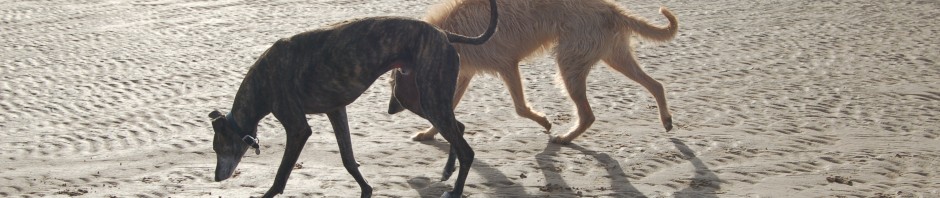
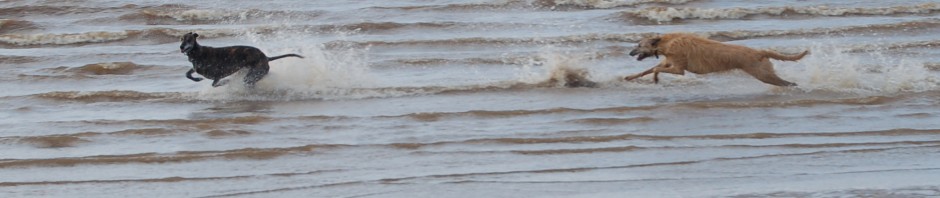
I have had more time that I might have expected to on my own. The noisy silence of the early mornings have captivated me. It has helped that at 11 years old, my capable canine companion, Pippin is happy to linger a while to smell and leave wee-mail.

I have listened to the spray of the rain under gently moving tyres

the gentle call of a bird

the stillness of a feline hunter

the jump of the pheasant

the wind chimes in the middle of the sheep field at Trearddur (you will need to visit to know that this is not an illusion)

the dance of the static on the topic of telegraph polls

geese taking off and the noise of the water swishing at they escape its embrace

the noise of fog horn

crash of wave

cry of an infant

It is a noisy silence… and in the noise I have found a rhythym and pace to begin Lent all over again.

Posted in Uncategorized | Leave a comment